


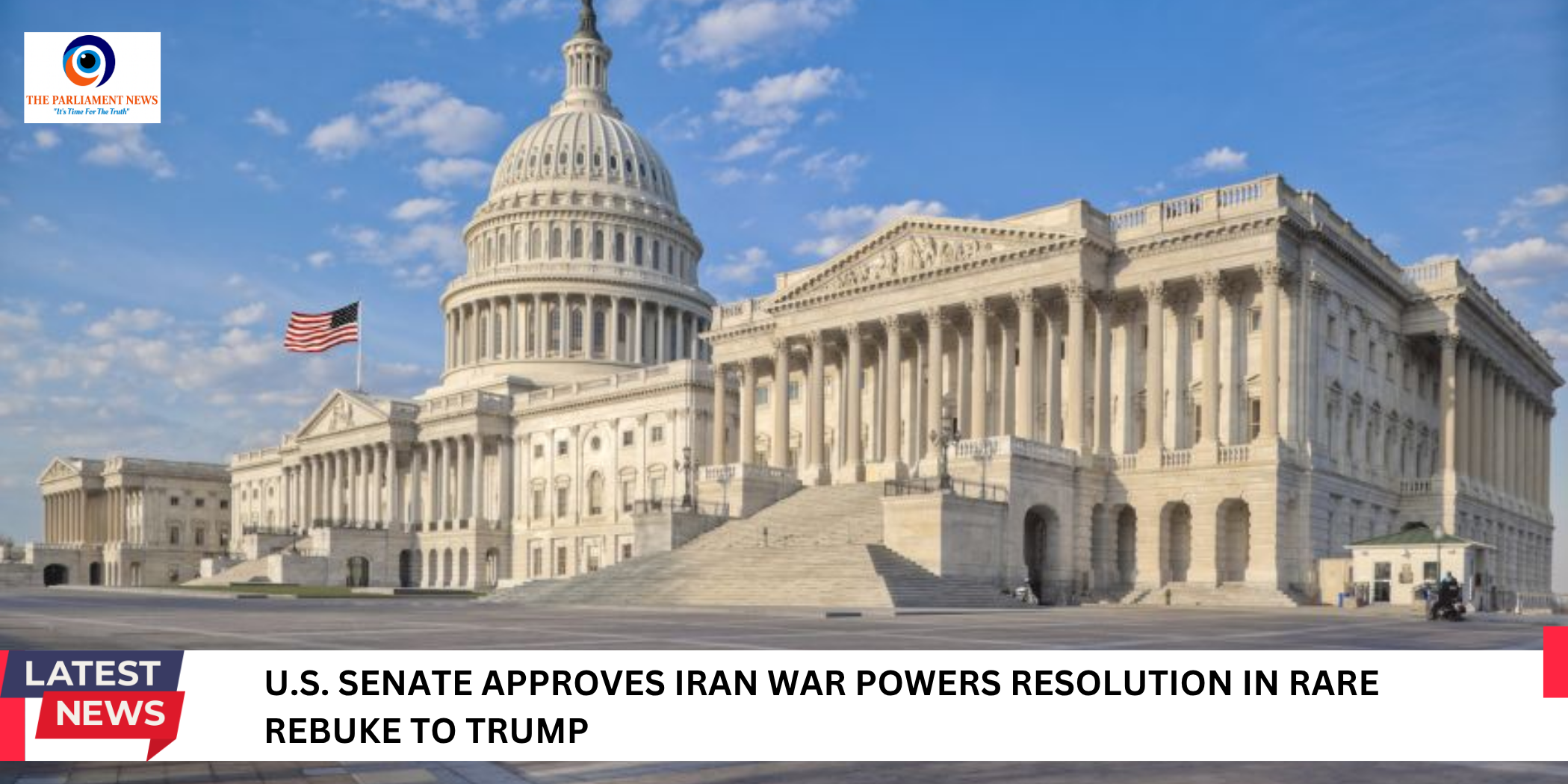
For the first time, the United States Senate has approved a war powers resolution seeking to limit military action against Iran, marking a significant moment in the debate over presidential war powers and the future of American involvement in the Middle East.
The resolution passed by a narrow 50-48 vote on June 23, 2026. While it does not carry the full force of law and is largely symbolic, the outcome represents a rare bipartisan rebuke of President Donald Trump’s handling of the Iran conflict and highlights growing concerns within Congress about the political, financial, and strategic costs of the war.
The vote comes just weeks after the United States and Iran announced a preliminary peace framework intended to end months of military confrontation. Yet even as diplomatic efforts continue, lawmakers appear increasingly focused on a broader question: what should America’s next chapter in the region look like?
Why the Vote Matters
At first glance, a symbolic resolution may appear to have limited practical impact. However, the significance of the Senate vote lies in the political message it sends.
For months, attempts to pass similar resolutions failed. This time, enough lawmakers crossed political lines to support the measure, signalling a shift in sentiment on Capitol Hill.
Several Republican senators joined Democrats in backing the resolution, reflecting growing discomfort not only with the war itself but also with the administration’s approach to ending it.
The vote suggests that support for military action is no longer as unified as it was during the early stages of the conflict.
The Cost of War Becomes Harder to Ignore
One of the biggest drivers behind congressional concern is the financial burden associated with the conflict.
The Pentagon is now seeking approximately $80 billion in additional funding to replenish military stockpiles, replace munitions, and support defence requirements linked to the Iran war.
Broader estimates place the overall cost of the conflict near $100 billion.
At a time when many Americans continue to face concerns over fuel prices, inflation, and household costs, lawmakers from both parties are facing increasing pressure to justify additional military spending.
The debate is no longer only about military strategy. It is increasingly becoming a debate about economic priorities.
A Challenge for Trump’s Iran Deal
The Senate vote also reflects unease surrounding the peace framework negotiated by the Trump administration.
The agreement, outlined in a memorandum of understanding signed last week, established a 60-day period for broader negotiations on Iran’s nuclear programme and regional security issues.
However, several Republicans have expressed concerns about specific elements of the deal, particularly reports of a proposed $300 billion reconstruction fund intended to support Iran’s recovery after the conflict.
Critics argue that such commitments could prove politically difficult to defend at home, especially after an expensive military campaign.
Supporters of the agreement, meanwhile, argue that a negotiated settlement remains preferable to a prolonged conflict that could destabilise the region further.
What It Means for Global Markets
Although the vote itself does not change U.S. foreign policy immediately, investors and global markets are paying attention.
The Senate’s action suggests that Washington may face increasing domestic resistance to any future escalation with Iran.
For energy markets, that could be viewed as a stabilising signal.
Reduced expectations of renewed conflict in the Gulf region could help support lower geopolitical risk premiums in oil prices. Stability around key shipping routes, particularly the Strait of Hormuz, remains a major concern for global energy markets and oil-importing countries.
Any indication that diplomatic solutions are gaining support may help calm market volatility, although uncertainty surrounding the peace framework remains.
Implications for Allies and Global Politics
The vote is also being watched closely by U.S. allies.
Many Western governments welcomed the ceasefire and subsequent negotiations with Iran, viewing diplomacy as the preferred path forward. The Senate resolution reinforces the idea that political support for another large-scale military confrontation may be limited.
For countries in Europe, Asia, and the Middle East, the outcome highlights how domestic politics in Washington can shape global security decisions.
It also demonstrates the growing influence of Congress in debates that were previously dominated by the executive branch during times of conflict.
A Debate Far From Over
The Senate’s approval of the war powers resolution does not end the debate over Iran, nor does it prevent future military action.
However, it marks an important political moment.
The vote reveals increasing scrutiny of the costs of war, growing questions about America’s long-term role in the Middle East, and a broader discussion about how military interventions should be authorised and funded.
As the Trump administration seeks to implement its peace framework with Iran while also requesting billions in additional defence spending, lawmakers appear determined to play a larger role in shaping what comes next.
The immediate conflict may be easing, but the political battle over its legacy is only beginning.
