


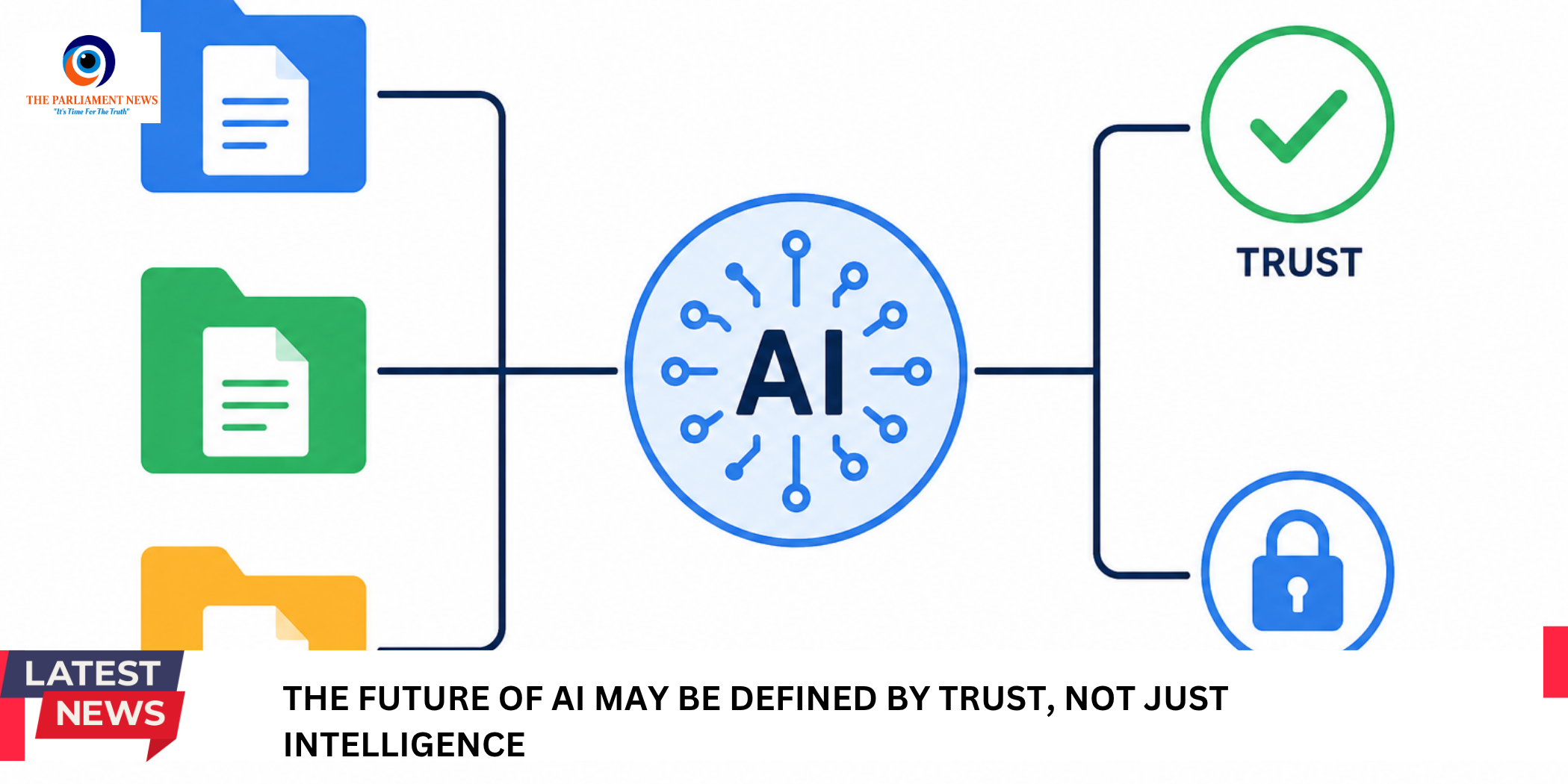
For the past few years, the race in artificial intelligence has largely been defined by who had access to the most powerful models. Today, that advantage is becoming increasingly difficult to sustain.
Powerful AI models are now widely available through cloud platforms and APIs, allowing startups to build sophisticated AI-powered applications in a matter of days rather than months. As access to cutting-edge models becomes more common, the question facing AI companies is beginning to change.
The challenge is no longer simply who has the smartest AI. It is increasingly becoming who manages data the best.
This shift is placing data governance at the centre of the AI economy.
AI Models Are Becoming a Commodity
Only a few years ago, building advanced AI systems required enormous computing resources, specialised expertise, and significant financial investment.
Today, startups can integrate state-of-the-art language models, image generators, and AI agents into their products with relatively low barriers to entry. While this has accelerated innovation, it has also reduced the technological gap between competitors.
If multiple companies can access similar AI models, the competitive advantage must come from somewhere else.
Increasingly, that advantage lies in proprietary data, responsible data management, and the ability to use information safely and effectively.
What Data Governance Really Means
Data governance is often viewed as a compliance requirement, but its role extends much further.
It refers to the processes and policies that ensure data is collected responsibly, stored securely, maintained accurately, and used transparently throughout its lifecycle.
Strong governance includes several key elements:
- Maintaining high-quality and reliable datasets.
- Protecting customer privacy and sensitive information.
- Establishing clear ownership and accountability for data.
- Meeting legal and regulatory requirements.
- Ensuring transparency in how AI systems use information.
Together, these practices help organisations build AI systems that are both effective and trustworthy.
Why Trust Is Becoming a Competitive Advantage
Artificial intelligence relies heavily on data.
If the underlying data is inaccurate, outdated, biased, or poorly managed, even the most advanced AI model can produce unreliable results.
For customers, trust increasingly influences purchasing decisions.
Businesses adopting AI want assurance that their information is protected, that regulatory obligations are being met, and that AI-generated outputs are based on reliable data.
Companies that demonstrate responsible data practices may therefore gain a competitive advantage that extends beyond technical performance alone.
The Growing Importance for Indian Startups
The conversation around data governance is becoming especially relevant in India.
As the country continues to strengthen its digital ecosystem and implement new data protection frameworks, startups are expected to place greater emphasis on responsible data handling.
Compliance is no longer simply about avoiding penalties. It is becoming an important part of building credibility with customers, enterprise clients, and investors.
For AI startups operating in sectors such as healthcare, finance, education, and public services, responsible data management will likely become a prerequisite for long-term growth.
Better Data Creates Better AI
Much of the discussion around AI focuses on model capabilities, but the quality of outputs depends heavily on the quality of inputs.
Well-governed datasets help reduce errors, improve consistency, and minimise bias in AI-generated responses.
They also make it easier for organisations to audit decisions, monitor system performance, and update models as regulations and business requirements evolve.
In many cases, improving data quality can deliver greater business value than simply adopting a newer AI model.
More Than Compliance
Many startups still view governance primarily as a legal obligation.
However, organisations that integrate governance into product development from the beginning may benefit in several ways.
Strong governance can improve operational efficiency, strengthen cybersecurity, simplify regulatory compliance, and build long-term customer confidence.
It also provides a stronger foundation for scaling AI products across industries and international markets.
Rather than slowing innovation, effective governance can enable sustainable growth.
The Future of AI Will Be Built on Trust
Artificial intelligence is entering a phase where access to advanced models is becoming increasingly universal.
As that happens, competitive advantage will depend less on the model itself and more on the systems surrounding it.
Companies that manage data responsibly, protect user privacy, maintain transparency, and establish strong governance frameworks are likely to be better positioned for long-term success.
For Indian startups, this shift represents both a challenge and an opportunity. Building intelligent AI products will remain important, but building trustworthy AI products may ultimately prove even more valuable.
In the years ahead, data governance is unlikely to be viewed merely as a compliance checklist. It is set to become one of the defining foundations of sustainable AI innovation.
