

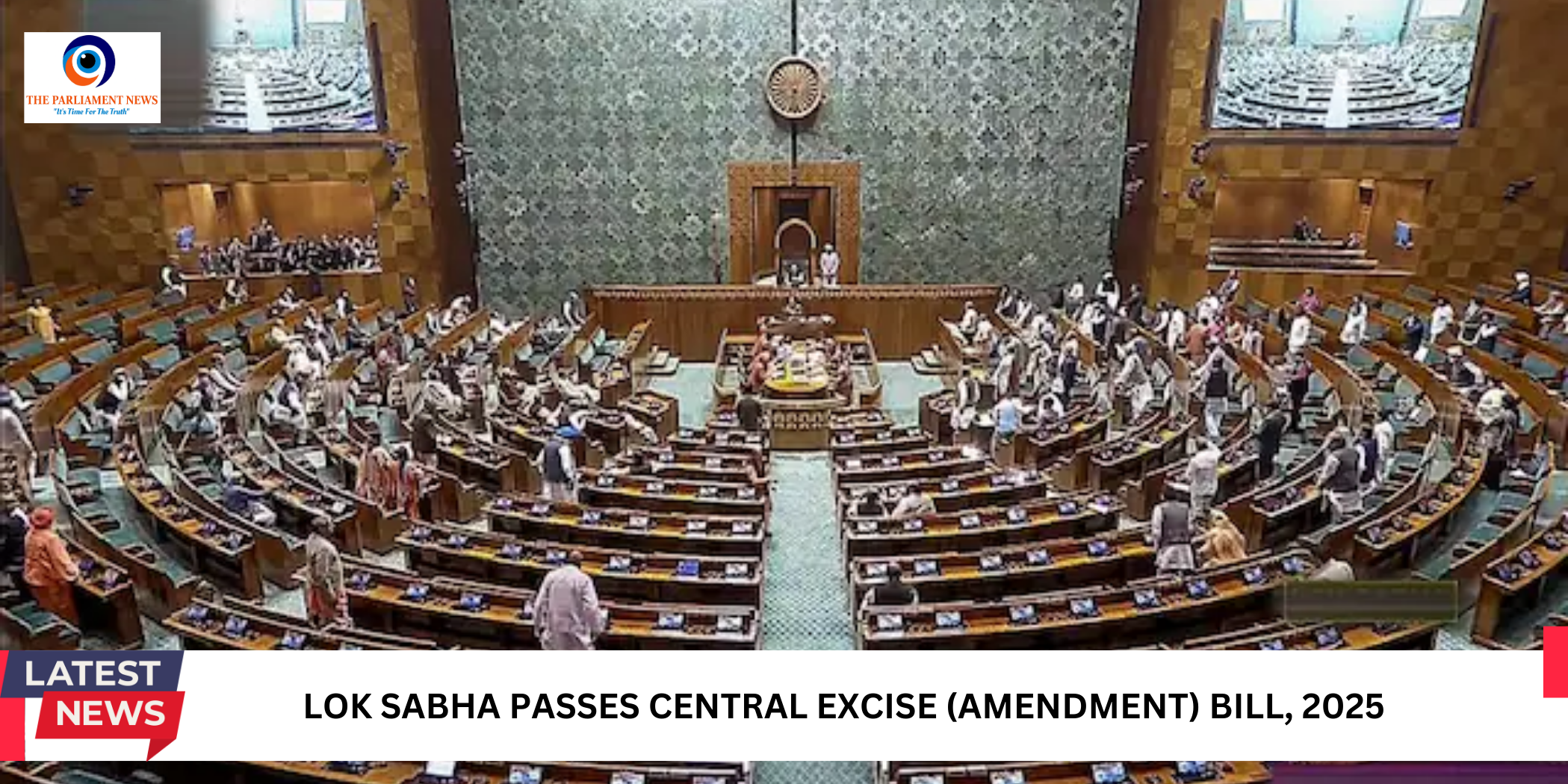
The Parliament has approved the Central Excise (Amendment) Bill, 2025, an important financial adjustment aimed at revising excise duties on tobacco and related products. The move restores the Centre’s authority to adjust levies on cigarettes, cigars, chewing tobacco, hookah tobacco, zarda, scented tobacco, and substitutes, ensuring tax incidence remains steady as the compensation cess mechanism winds down.
Although the subject may seem technical, the Bill carries significant implications for public health, state revenues, and long-term agricultural planning.
Why the Amendment Was Needed
The Central Excise Act, 1944 empowers the government to levy excise duties on domestically produced goods. After the introduction of GST, compensation cess was used to tax harmful products like tobacco. With that cess period ending, an amendment was required to maintain the existing tax burden without creating a revenue vacuum.
By revising duty rates upward on various forms of tobacco, the Bill ensures the overall tax incidence remains consistent with previous levels, even as the cess reverts to the Centre and transitions into excise duty.
Government’s Clarification: “No New Tax”
Replying to the debate, Finance Minister Nirmala Sitharaman emphasised that the changes do not impose a new tax or create an additional burden beyond what already existed before GST. She noted that:
- Excise duty on tobacco predates GST and is simply being reinstated in structure.
- Compensation cess rates on tobacco have remained unchanged since July 2017.
- Historically, tobacco duties increased annually before GST’s introduction, largely for public health reasons.
She reminded the House that India’s current tax incidence on cigarettes amounts to roughly 53 percent of the retail price—still below the levels recommended by global health bodies for discouraging consumption.
Health, Revenue, and Agricultural Shifts
The Minister also highlighted efforts to reduce tobacco cultivation, pointing to initiatives under the Rashtriya Krishi Vikas Yojana. Between 2018 and 2021–22, more than 1.12 lakh acres shifted from tobacco to alternate crops across ten major tobacco-growing states. She reiterated that states will continue receiving their 41 percent share from central tax devolution, ensuring revenue stability.
Debate Highlights: Concerns and Perspectives
Several MPs across party lines weighed in during the discussion:
Public Health and Youth Protection
Dr. D. Purandeswari (BJP) underscored the alarming toll of tobacco use in India, with an estimated 1.35 million deaths annually from illnesses linked to smoking or chewing tobacco. She argued that maintaining high prices and stable taxation is essential to discouraging youth addiction and protecting vulnerable groups.
Economic Costs and Alternatives
Karti P. Chidambaram (Congress) pointed out that tobacco imposes nearly two lakh crore rupees of economic loss each year. He questioned whether price hikes alone can reduce consumption, warning that people may turn to cheaper or unregulated alternatives. He called for a holistic strategy, including rehabilitation for those employed in the tobacco industry.
Impact on Farmers
Naresh Chandra Uttam Patel (SP) urged that the Bill be referred to a Standing Committee, arguing that the changes could affect tobacco growers who depend on the crop for livelihood stability.
Representatives from NCP (SCP), Trinamool Congress, TDP, Shiv Sena, CPI(ML), and other parties offered varied perspectives, reflecting the complexity of balancing health, revenue, and agricultural needs.
After extended discussion, the House adjourned for the day.
What Comes Next?
With the Bill passed in the Lok Sabha, the next steps involve implementation, recalibration of duty structures, and communication to industry stakeholders. The transition will be closely watched by public health advocates, state governments, and farmers’ groups alike.
