


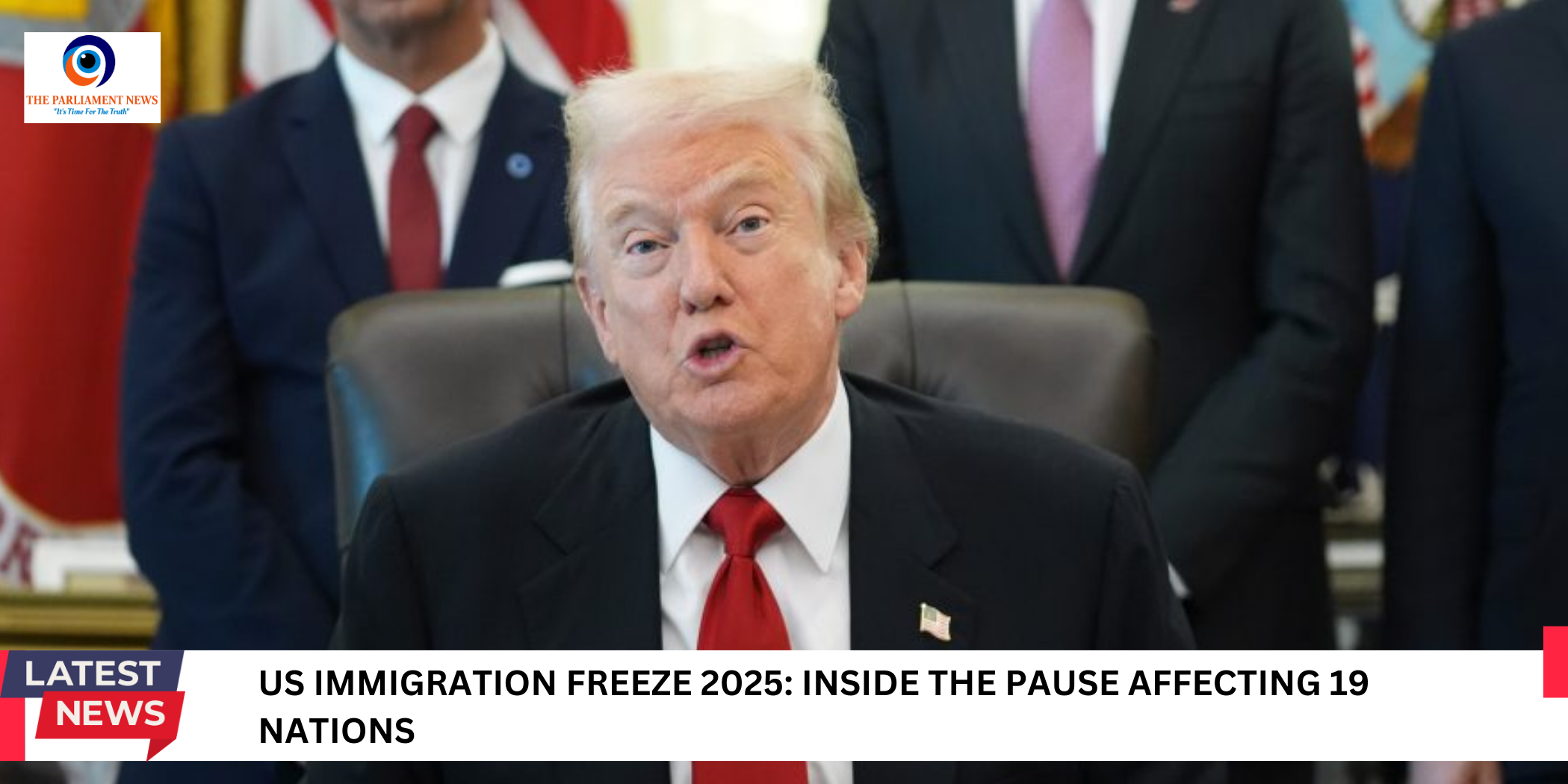
The United States has entered another chapter in its evolving immigration landscape. A recent memo from the US Citizenship and Immigration Services (USCIS) confirmed that immigration applications from nationals of 19 countries have been temporarily paused. This move, announced under the Trump administration, has already generated debate across political, humanitarian, and legal circles.
While the decision aligns with previous travel restrictions imposed earlier in the year, it marks a significant escalation in how the administration aims to regulate who enters and ultimately settles in the US. Notably, Indian nationals are not part of the affected group.
Why the Freeze Was Announced
The pause follows a high-profile incident in Washington DC, where an Afghan national—who had received asylum during Trump’s earlier presidency—was involved in a violent attack targeting national guards.
In the aftermath, the administration emphasized the need for enhanced vetting before granting immigration benefits.
According to USCIS, delaying applications was a necessary tradeoff for what they described as “maximum possible screening.” While this move is framed as a security measure, critics argue it may disproportionately burden individuals from low-income or conflict-torn nations who already face lengthy immigration timelines.
Who Is Affected?
The pause applies to both green card and citizenship applications filed by people from the 19 nations listed under restrictive travel categories. These include:
Iran, Sudan, Eritrea, Haiti, Somalia, Venezuela, Afghanistan, Libya, Yemen, and several others already facing travel limitations.
Reports estimate that over 1.4 million applicants could be impacted by the freeze.
Indian nationals, however, will not experience any changes under this directive.
A Continuation of Earlier Restrictions
In June, the administration had already blocked or restricted entry from 19 nations through a presidential proclamation. These included Afghanistan, Iran, Libya, Somalia, Sudan, Yemen, and partial restrictions for countries such as Cuba, Laos, Sierra Leone, and Togo.
This new USCIS memo extends the practical effects of those limitations into the adjudication process itself. Even those already in the United States, legally present and awaiting permanent residency or citizenship, will face delays.
Political Framing and Heated Rhetoric
The decision has been accompanied by strong language from various administration officials.
The Department of Homeland Security emphasized that citizenship must be reserved for “the best of the best.”
Homeland Security Secretary Kristi Noem publicly called for a complete ban on what she described as nations “flooding our country” with people who pose societal risks.
Such statements reveal not only the administration’s stance on immigration but also the tone of public messaging heading into a politically charged period.
This temporary pause may be the beginning of broader structural changes to the US immigration system. While the memo itself frames the move as a security-driven measure, it signals deeper shifts toward restrictiveness under the Trump administration’s current term.
The true impact will be felt by families awaiting reunification, asylum seekers hoping for stability, and long-term residents aspiring to citizenship. With more than a million applicants stuck in limbo, the policy’s humanitarian and geopolitical implications will continue to unfold in the months ahead.
