


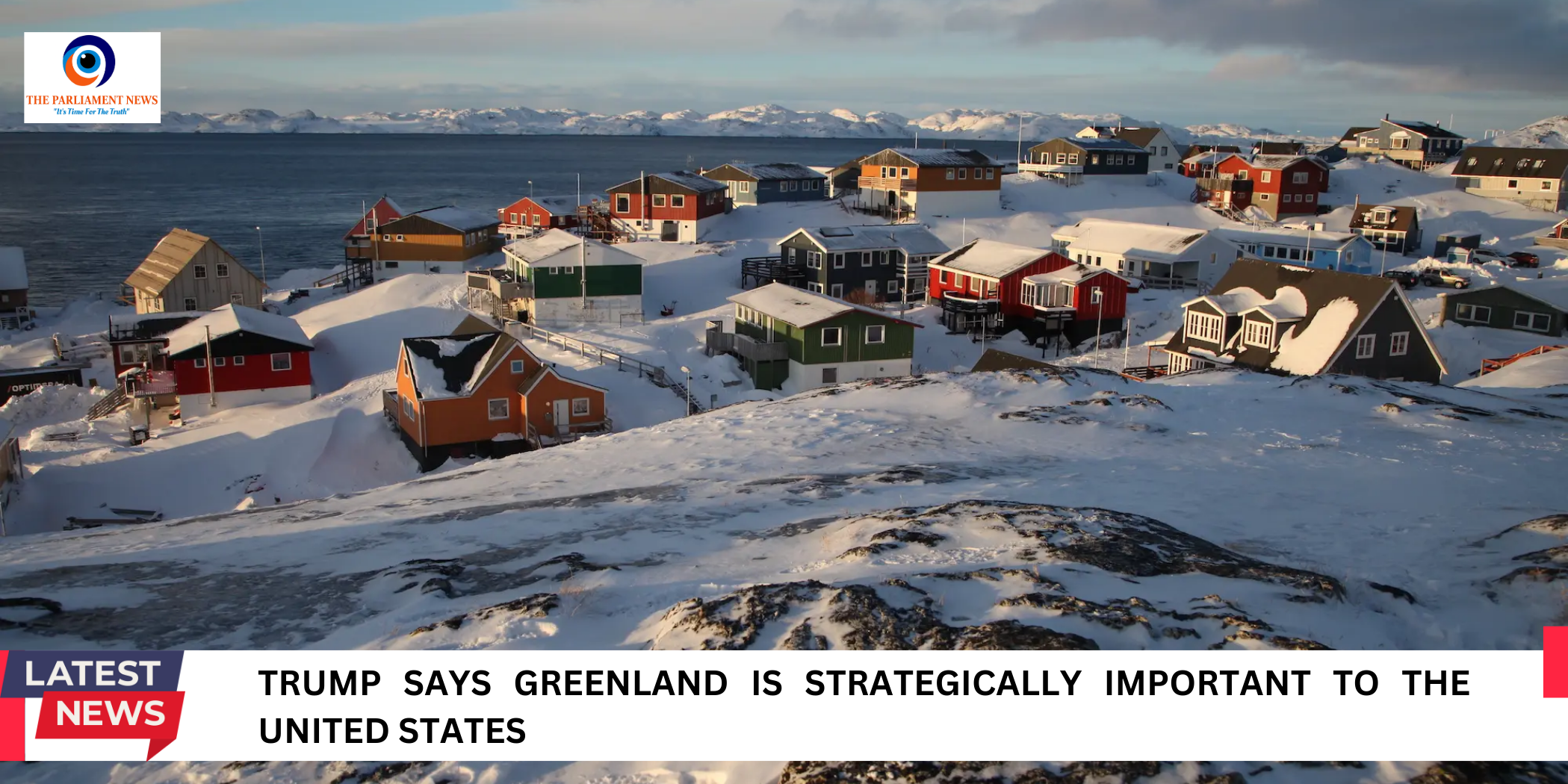
For years, Donald Trump’s interest in Greenland was treated as political theatre an outrageous idea floated for shock value rather than strategy. That assumption no longer holds. In the aftermath of the US operation in Venezuela, Trump’s language and posture suggest something more consequential: a willingness to reshape borders, influence sovereign nations, and openly challenge long-standing international norms.
What once sounded implausible is now being discussed seriously in European capitals.
Why Greenland Suddenly Matters So Much
Greenland is no frozen backwater. Strategically, it sits at the crossroads of the North Atlantic, commanding access to vital sea lanes that would be decisive in any large-scale conflict. During World War II, control of nearby waters shaped naval warfare. Today, the island’s importance has only grown.
The United States already operates a key military base there, integral to missile detection and early-warning systems. As Arctic ice melts, new shipping routes are emerging, transforming Greenland into a gateway between continents. China and Russia have taken note and Washington has no intention of being left behind.
Security Argument or Strategic Overreach?
Trump argues that US control over Greenland is essential for national security. Yet critics point out that the United States already enjoys sweeping military access through agreements with Denmark, a NATO ally. Reinforcing defenses or expanding bases could be achieved without challenging sovereignty.
Denmark and Greenland’s leaders have repeatedly stated that while they are open to partnerships including cooperation on rare earth minerals and infrastructure the island is not for sale.
That distinction appears increasingly irrelevant to a White House that views power as leverage rather than consensus.
Resources Beneath the Ice
Beyond military considerations, Greenland holds enormous economic potential. Vast reserves of rare earth minerals, offshore oil, and gas could play a central role in future technologies and defense systems. As climate change makes extraction easier, the island’s value will only rise.
If access to resources were the real goal, negotiated agreements could serve all sides. Instead, Trump’s approach signals dominance rather than collaboration.
A Shift Toward Open Imperialism
Trump’s recent claim that he was effectively “running” Venezuela following the removal of its leadership marked a turning point. It suggested a move from provocative rhetoric to unapologetic control. The subsequent announcement that Venezuelan oil revenues would be managed under US oversight only deepened concerns.
To critics, this reflects a broader pattern: territorial ambition driven by legacy, symbolism, and power projection rather than diplomacy.
Europe’s Alarm Bells Are Ringing
European leaders are no longer dismissive. France, Germany, Italy, Poland, Spain, and the UK have publicly affirmed that Greenland belongs to its people. Denmark has warned that any attempt to seize the territory by force would effectively end NATO as it exists today.
The irony is stark. For decades, NATO feared threats from Moscow or Beijing not from its most powerful member.
An Unequal Power Dynamic
Europe’s dependence on US military protection limits its options. While Denmark has been a steadfast ally, even suffering significant casualties alongside American forces in past wars, it cannot realistically defend Greenland against the United States.
This imbalance gives Trump extraordinary leverage and places European leaders in a diplomatic bind: how to resist without provoking a rupture they cannot afford.
Can This Actually Happen?
Despite the heated rhetoric, significant legal and political barriers remain. Any purchase or transfer of Greenland would likely require Congressional approval, European Union involvement, and complex treaty negotiations. The cost alone could run into hundreds of billions of dollars.
The question is whether US lawmakers and voters would support such an acquisition at a time when domestic economic pressures are mounting.
A Fragile Moment for the West
Some former US and NATO officials are urging restraint, warning that diplomacy, not coercion, has preserved Western stability for decades. But moderation appears increasingly absent from an administration emboldened by recent victories and unrestrained by internal opposition.
Greenland may never become “Trumpland.” But the fact that the possibility is now openly debated marks a profound shift in global politics.
