


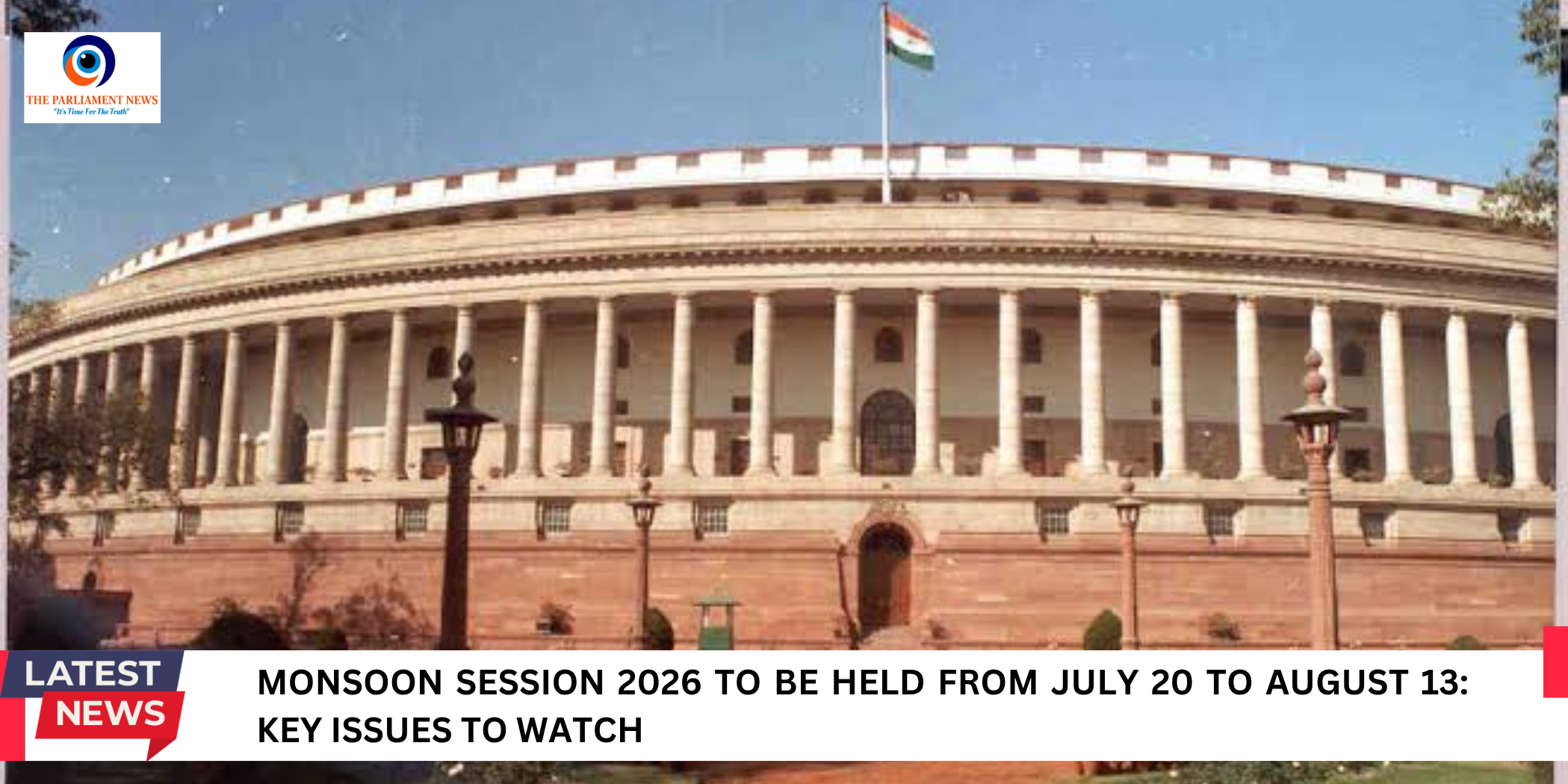
The Government of India has announced that the Monsoon Session of Parliament will be held from July 20 to August 13, 2026, following approval by President Droupadi Murmu on the recommendation of the government. As one of the three regular parliamentary sessions held each year, the Monsoon Session serves as a crucial platform for introducing legislation, debating national issues, and holding the government accountable.
While the official legislative agenda will be released closer to the session, the announcement has already sparked discussions about what Parliament could prioritize in the coming weeks. From pending bills to economic reforms and political debates, here’s what to expect from the Monsoon Session 2026.
Why the Monsoon Session Matters
The Monsoon Session comes at an important point in the parliamentary calendar. Unlike the Budget Session, which is primarily focused on financial legislation, the Monsoon Session often provides the government with an opportunity to push forward pending bills and introduce new policy initiatives.
It is also a significant period for parliamentary oversight. Through Question Hour, Zero Hour, debates, and committee discussions, Members of Parliament have the opportunity to scrutinize government policies, seek accountability, and raise issues affecting citizens across the country.
For businesses, investors, and policy observers, this session can provide early indications of the government’s legislative priorities for the remainder of the year.
Key Bills to Watch
At the time of writing, the government has not released the complete list of bills scheduled for discussion during the session. However, political observers expect Parliament to take up a mix of pending legislation and fresh proposals across several sectors.
Areas that could receive legislative attention include:
- Economic and financial reforms
- Digital governance and emerging technologies
- Infrastructure and urban development
- Administrative and regulatory reforms
- Social welfare and public service delivery
The final agenda will become clearer once the government publishes the official List of Business ahead of the session.
Major Issues Likely to Dominate Debate
Although the legislative business remains to be finalized, several national issues are expected to feature prominently during discussions.
Economy and Inflation
Economic growth, inflation, fiscal management, and employment are likely to remain central topics. Members may seek updates on government measures aimed at supporting growth while managing price pressures and maintaining fiscal stability.
Employment and Skill Development
Job creation continues to be an important public concern. Parliament may witness discussions on employment generation, skill development initiatives, startups, manufacturing, and opportunities for young professionals.
Agriculture and Monsoon Preparedness
With the session coinciding with the rainy season, issues related to agriculture, crop production, irrigation, food security, and disaster preparedness could receive considerable attention, especially if weather conditions affect different parts of the country.
Infrastructure and Development
Large-scale infrastructure projects, transportation networks, urban development, and public investment are expected to remain key discussion points as the government continues its long-term development agenda.
Digital Governance and Technology
India’s rapidly evolving digital economy has made technology policy increasingly important. Parliament could debate topics such as artificial intelligence, cybersecurity, data governance, digital public infrastructure, and online safety.
National Security and Foreign Policy
Depending on domestic and international developments, Members of Parliament may also discuss national security, border management, defence preparedness, and India’s diplomatic engagements.
What Role Will the Opposition Play?
The Monsoon Session is expected to witness active participation from opposition parties, who are likely to raise questions on governance, economic performance, public welfare, and other pressing national concerns.
Parliamentary debates often provide an opportunity for both the government and the opposition to present their perspectives, challenge policy decisions, and seek greater accountability through structured discussions.
The extent of cooperation or confrontation between the two sides will play an important role in determining the productivity of the session.
What Should Citizens Watch?
While parliamentary proceedings may appear distant from everyday life, many discussions can have a direct impact on citizens.
Readers should keep an eye on:
- New legislation that could affect businesses and consumers
- Announcements related to welfare programmes
- Policy changes impacting education, employment, or healthcare
- Economic reforms and regulatory changes
- Updates on infrastructure and public services
The debates held during this session could shape government policy for the months ahead.
Looking Back: Building on Previous Sessions
Each parliamentary session builds upon unfinished legislative business from earlier sittings. The Monsoon Session provides an opportunity to revisit pending bills, continue policy discussions, and address emerging national issues that have gained prominence since the Budget Session.
It also serves as an important measure of Parliament’s effectiveness, with observers closely tracking legislative productivity, the quality of debates, and the ability of both the government and the opposition to engage constructively.
Final Thoughts
With Parliament set to convene from July 20 to August 13, the Monsoon Session 2026 is expected to be more than just another legislative calendar event. It offers the government a chance to advance its policy agenda, the opposition an opportunity to scrutinize decisions, and Parliament as a whole the responsibility of debating issues that matter to millions of Indians.
As the official legislative agenda is announced in the coming days, attention will shift from the session’s schedule to the substance of the debates and decisions that could shape India’s policy landscape for the rest of the year.
