


Delhi greeted Monday under a heavy blanket of toxic smog, with the city’s overall Air Quality Index touching 397 at 6am, according to the Central Pollution Control Board.
Low wind speeds and dropping temperatures have trapped pollutants close to the ground, pushing large parts of the capital into the ‘very poor’ and ‘severe’ categories.
Half of Delhi’s 39 monitoring stations recorded AQI levels above 400, while the remaining hovered between 300 and 400. Pollution levels have stayed alarming for nearly three straight weeks, with winter conditions and post-Diwali farm fires worsening the already fragile air quality.
Areas like Vivek Vihar and Rohini saw the most worrying readings, crossing 450 — a level known to exacerbate respiratory and cardiovascular stress.
An 18-Day Crisis Continues
From November 6 onward, Delhi has barely seen a day of breathable air. The city logged three consecutive ‘severe’ days between November 11 and 13, and the 24-hour average AQI has consistently stayed within dangerous limits.
Doctors across the capital report a sharp surge in patients complaining of persistent cough, burning eyes, headaches, and aggravated asthma. Pulmonologists warn that extended exposure to this level of pollution can leave lasting effects even in healthy adults.
In response, authorities rolled out restrictions under Stage 3 of the Graded Response Action Plan, urging residents to limit outdoor movement and reduce non-essential activities.
Public Anger Spills Onto the Streets
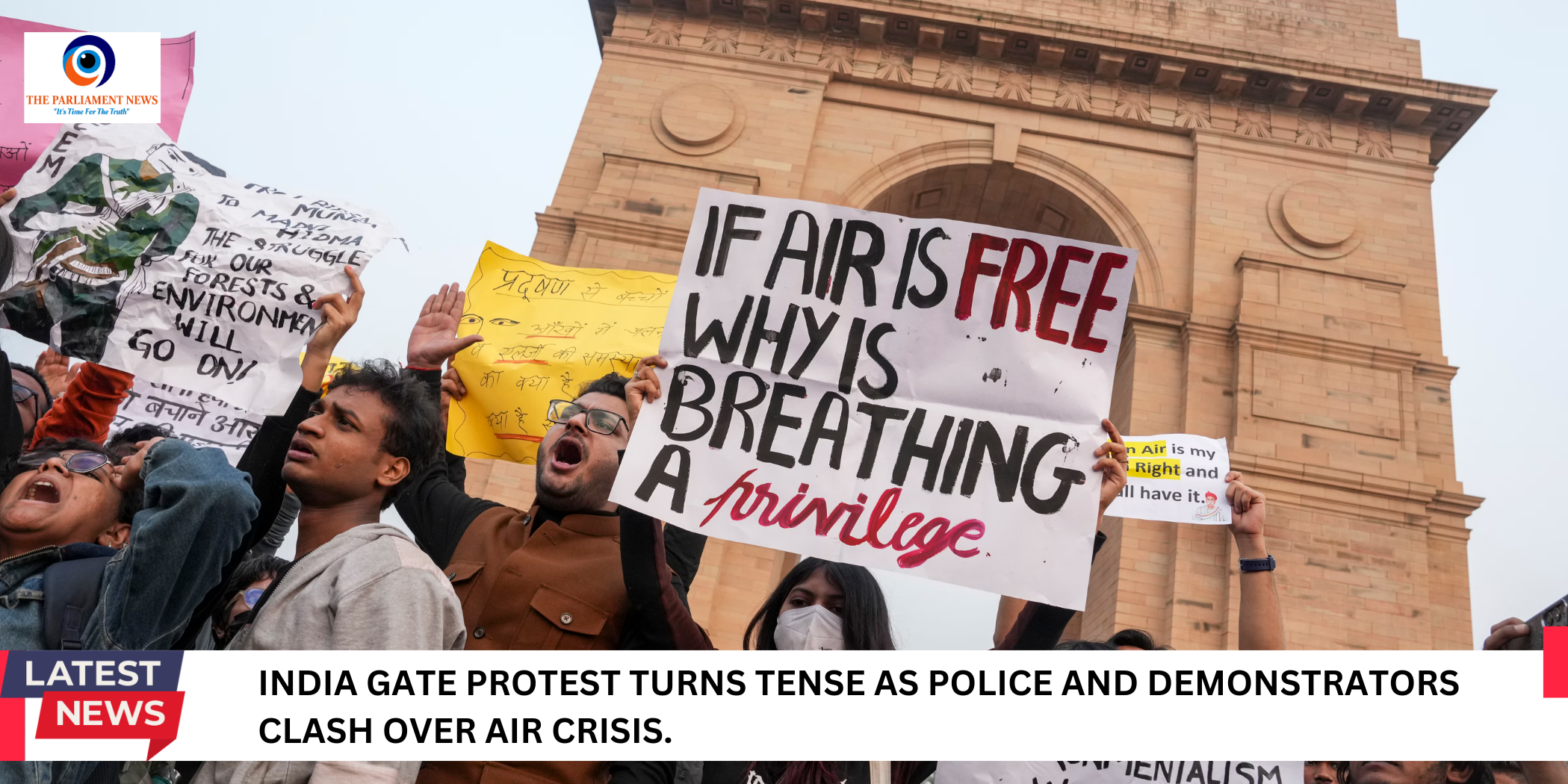
As the air thickened, public frustration found its way to India Gate on Sunday evening. Citizens, concerned over the prolonged health crisis, assembled to demand stronger action from the government.
But what began as a peaceful gathering escalated unexpectedly when police attempted to disperse the crowd citing obstruction to emergency vehicles. According to officials, some demonstrators allegedly used chilli spray during the scuffle.
The group leading the demonstration claimed that when “the air itself becomes poisonous,” citizens are compelled to raise their voices for basic survival. Police, however, emphasised that the protest had blocked medical teams trying to pass through the area.
Police Personnel Injured Amid Chaotic Scenes
Deputy Commissioner of Police Devesh Kumar Mahla described the incident as unprecedented, stating that it was the first time officers had been targeted with pepper spray during an air pollution protest. Several personnel faced irritation and burning in the eyes and face, and were taken to RML Hospital for treatment.
Authorities have confirmed that legal action will be initiated against those responsible for the assault.
A City Struggling for Breath and Accountability
Delhi’s pollution crisis is far from new, yet each winter seems to bring a sharper reminder of how fragile the city’s air has become. This episode — a rare mix of health emergency, public protest, and police confrontation — reflects a deeper frustration building among citizens who feel their basic right to clean air is slipping away.
As pollution levels show no signs of easing, the city stands at a crossroads between environmental exhaustion and a rising demand for accountability.
