


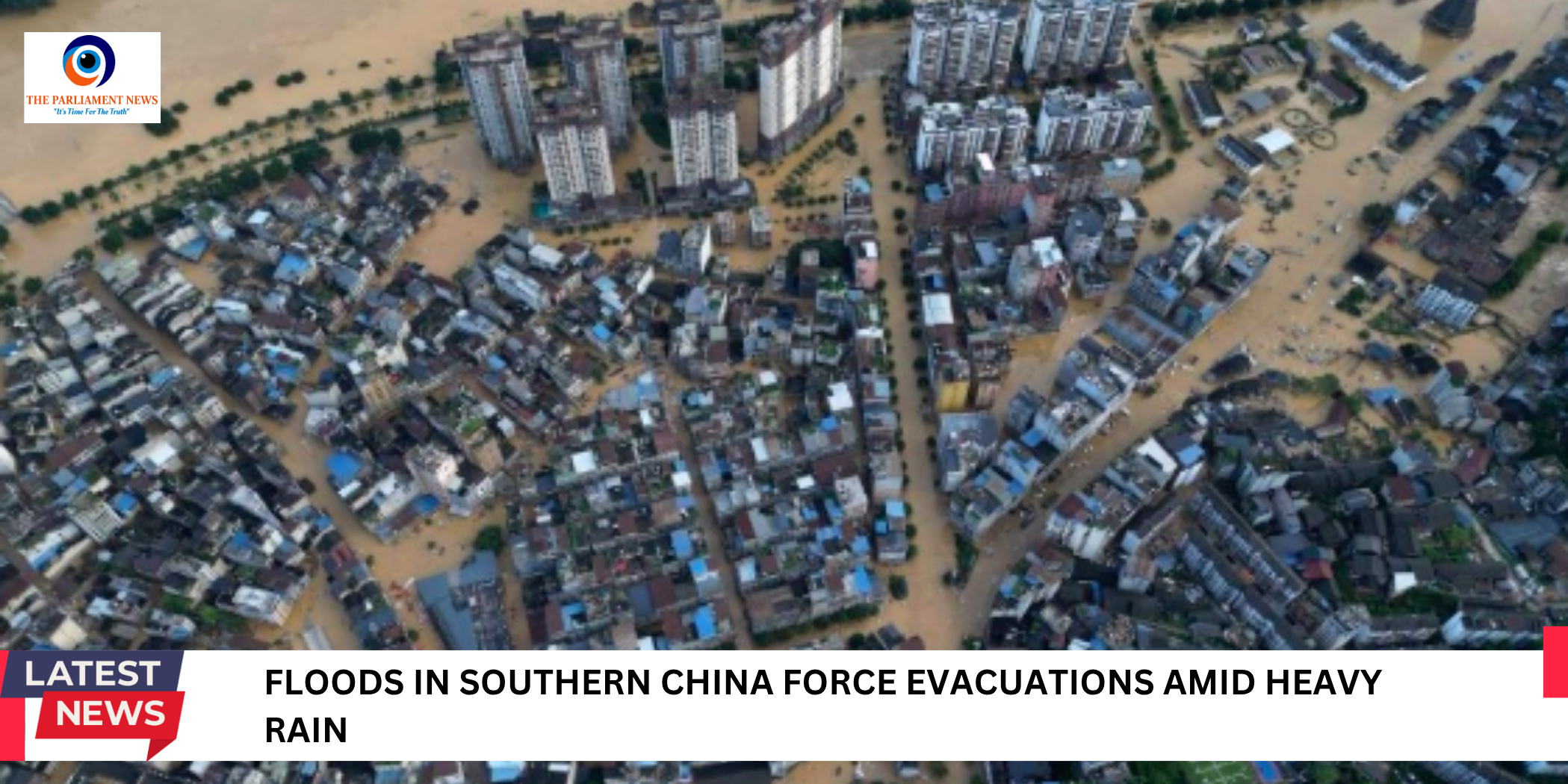
Heavy rainfall in southern China has triggered widespread flooding, forcing around 200 residents to evacuate their homes in Qinzhou. The flooding submerged vehicles and inundated residential areas, prompting emergency response measures.
According to Chinese state media and Xinhua, several residents were trapped as water entered homes, with rescue teams navigating chest-high floodwaters to reach those stranded. Emergency personnel were seen evacuating vulnerable individuals, including the elderly, using boats and manual assistance.
Authorities reported that at least 30 residents had been safely evacuated and relocated to temporary shelters. Emergency services deployed 25 fire trucks and around 150 personnel to assist in rescue operations. Schools in affected areas were closed, with authorities advising a shift to remote learning due to safety concerns.
Weather forecasts indicate continued heavy rainfall across multiple provinces, including Guangxi, Guangdong, Fujian, Zhejiang, Jiangxi, and Hunan. Rainfall in some regions is expected to exceed 100 mm, with certain areas likely to receive between 150 mm and 200 mm. In response, China’s flood control and emergency management authorities have initiated high-level coordination efforts to strengthen disaster response and monitoring.
Beyond China, severe weather conditions are affecting parts of South and Southeast Asia. Heavy rainfall and thunderstorms have been forecast for Bangladesh, northern Myanmar, and northeastern regions of India, including Nagaland, Manipur, and Assam. Weather experts have predicted rainfall levels of up to 250 mm in some areas.
In Bangladesh, lightning strikes associated with the storms have resulted in fatalities and injuries, particularly among outdoor workers. The adverse weather follows a period of intense heat in Dhaka, increasing the impact of sudden thunderstorms.
Meanwhile, India’s capital, New Delhi, is experiencing a severe heatwave, with temperatures exceeding 44.5°C. The India Meteorological Department has issued advisories urging residents to limit outdoor activities during peak afternoon hours and take precautions against heat-related illnesses.
Authorities have recommended increased fluid intake and awareness of symptoms such as dizziness, fever, and dehydration. Schools in some areas have been closed as a precautionary measure. The IMD has indicated that heatwave conditions are likely to persist across parts of northwest and central India in the coming days, although some relief may occur with expected thunderstorms and gusty winds later in the week.
The series of extreme weather events across the region highlights ongoing climate variability and the need for preparedness measures to minimise risks to life and property.
