

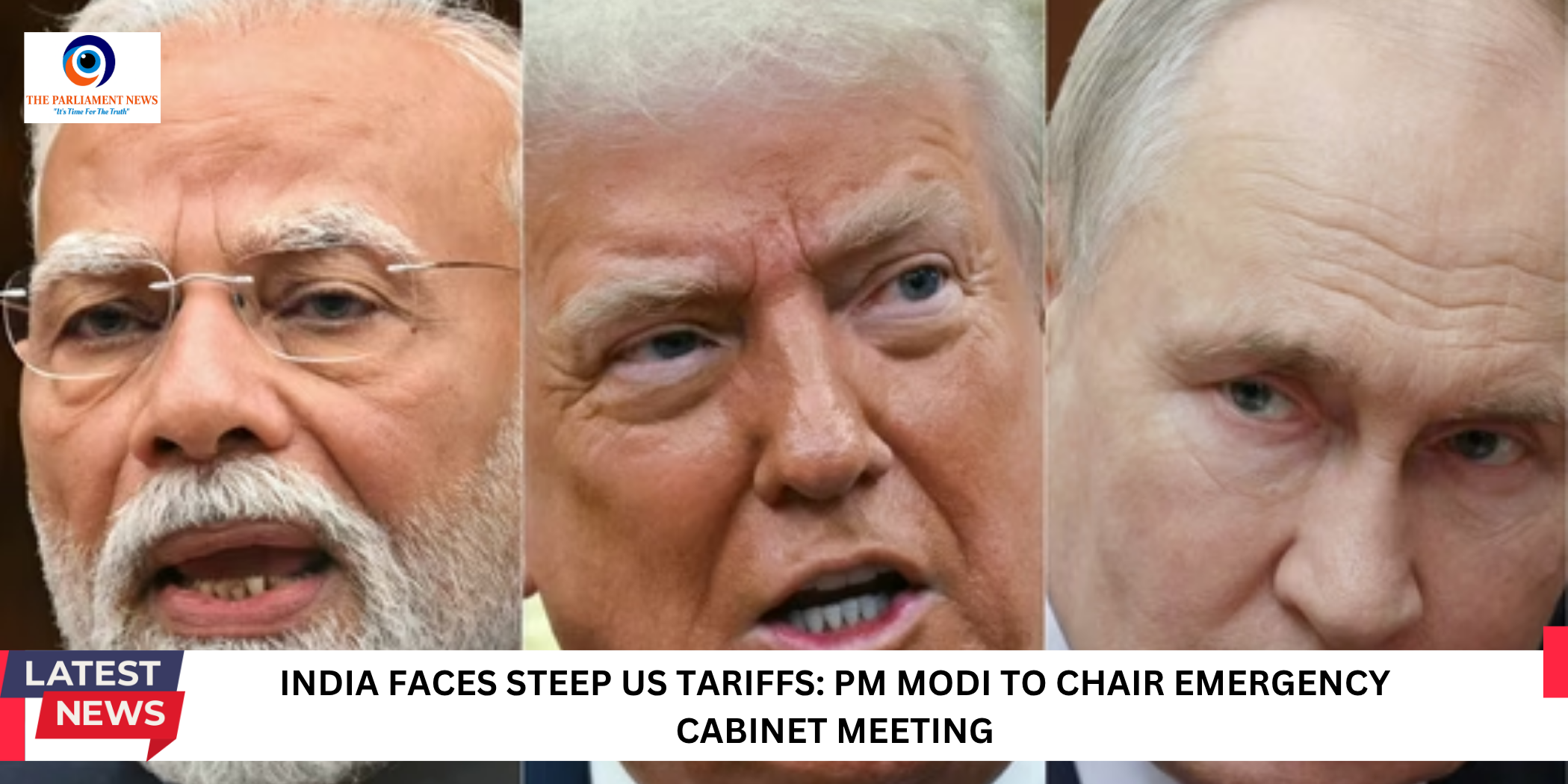
The corridors of power in New Delhi are bracing for tense deliberations this Friday at 1 pm. Prime Minister Narendra Modi will convene a high-level Cabinet meeting to strategize India’s response to the steep 50% tariff recently announced by US President Donald Trump on Indian exports.
The decision, tied to India’s trade with Russia, has injected sudden strain into a relationship that had been enjoying a period of relative warmth. The move comes as Washington ramps up economic pressure on Moscow, using global trade levers to force a potential ceasefire in the Ukraine conflict.
Why the Tariff Hike Matters
This is not just another trade dispute. The US has effectively doubled duties on Indian imports in two waves — the first 25% earlier in the year, followed by an additional 25% this week. The second hike was explicitly linked to India’s continued oil purchases from Russia, making it part of Washington’s broader sanctions playbook.
While the new tariff won’t kick in until August 27, the signal is clear: nations trading with Moscow could face economic retaliation. India, as Russia’s second-largest oil customer, finds itself directly in the crosshairs.
Trump’s Position — No Talks Until Resolution
Speaking to reporters, President Trump was unequivocal: there will be no fresh trade negotiations with India “until we get it resolved.” The ambiguity lies in what needs resolving — is it India’s energy ties with Russia, the larger Ukraine conflict, or the lingering issues from the first round of tariffs?
Either way, Washington’s stance leaves New Delhi with limited diplomatic room in the short term. The timeline is even tighter as Trump’s initial 50-day ceasefire deadline for Moscow was cut to 12 days, ending today.
India’s Economic Stakes
A 50% tariff could severely impact key export sectors such as textiles, engineering goods, and certain agricultural products. Beyond the immediate economic hit, the move raises questions about the stability of trade partnerships in an increasingly politicized global market.
For India, the challenge will be balancing its strategic autonomy in foreign policy with the economic realities of global trade dependence.
What Happens Next
Friday’s Cabinet meeting is expected to explore multiple responses, including:
- Diplomatic engagement to seek partial rollbacks or exemptions.
- Diversifying export markets to reduce reliance on the US.
- Accelerating domestic trade reforms to offset losses.
The outcome will signal whether India intends to take a conciliatory path or prepare for a prolonged trade standoff.
