


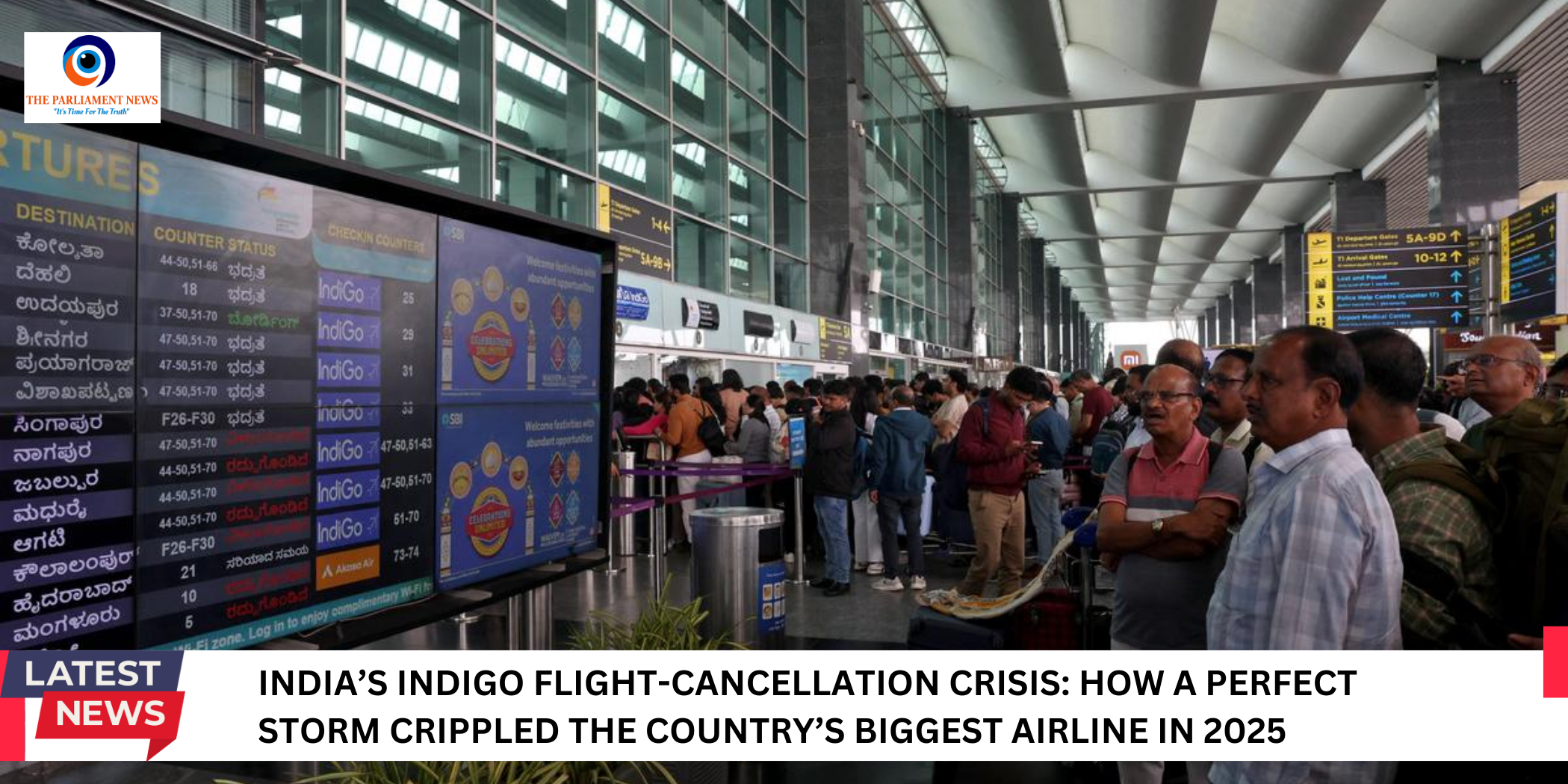
The first week of December 2025 has carved its own place in Indian aviation history and not for the right reasons. What began as a worrying spike in cancellations in November snowballed into a full-blown operational collapse for IndiGo, the country’s largest airline. Tens of thousands of passengers were stranded, airports spiraled into chaos, and the government stepped in as the situation grew worse by the hour.
Below is a clear, human, and deeply reported narrative of what really happened, how the system cracked, and why the crisis isn’t over yet.
A Crisis Years in the Making
IndiGo cancelled 1,232 flights in November, a number that hinted at deeper structural cracks—far beyond the occasional weather hiccup or congestion delay. The airline blamed “operational reasons,” but insiders pointed to something more concerning:
- A critical shortage of pilots and cabin crew
- A stretched roster system that had been pushed too far
- Mounting pressure from new fatigue-management rules
By December, these weak links snapped.
Early December: The Breaking Point
4 December: The Industry Comes to a Halt
Over 550 flights were cancelled in a single day, with major hubs hit the hardest:
- Delhi: approx. 172
- Mumbai: approx. 118
- Bengaluru: 100+
- Hyderabad: around 75
Terminals overflowed with passengers who had no prior warning, no alternatives, and no clarity.
5 December : The Collapse Deepens
Cancellations crossed 1,000 flights nationwide, marking one of the darkest days ever for Indian civil aviation. Long queues curled around terminals, baggage piled up unattended, and customer-service counters struggled to cope with the sheer volume of distressed travellers.
6 December: A Slight Dip, But No Relief
IndiGo’s statement that cancellations had “reduced” offered little comfort—the number still sat below 850, hardly a sign of recovery.
The damage had been done. And the cumulative tally reached several thousand cancellations in barely a few days.
The Real Root Cause: A Workforce Stretched to Breaking Point
At the heart of the crisis lies one hard truth: IndiGo simply didn’t have enough rested, legally compliant crew to operate the schedule it had promised.
The newly enforced Fatigue Duty Time Limits (FDTL) rules further tightened:
- Mandatory longer rest hours
- Shorter night-duty windows
- Stricter caps on consecutive duty periods
These reforms were introduced for safety fatigued crews are a known risk. But IndiGo’s staffing model had little wiggle room. Once the new rules kicked in, the entire ecosystem faltered.
Add winter fog delays, ATC slot restrictions, and airspace constraints—and the system jammed.
Passengers Bore the Brunt
The meltdown wasn’t just numbers on a chart. It was lived misery for ordinary flyers:
- Missed weddings and important meetings
- Endless rebooking queues
- Sudden gate changes and last-minute cancellations
- Bags that arrived days late
- Fare prices on alternative carriers skyrocketing
IndiGo waived fees and promised quick refunds, but many passengers waited hours just to speak to a customer-service representative.
Government Steps In
The scale of the chaos forced the aviation ministry to intervene. Directives issued to IndiGo included:
- Clear all pending refunds immediately
- Cap fares on crucial routes
- Improve baggage-handling protocols
- Submit a detailed operational recovery plan
- Increase transparency on schedule stability
The regulator also began evaluating whether the current market structure, where one airline commands such dominance is inherently risky.
A Slow, Painful Road to Recovery
Despite the “network reboot” underway, IndiGo has already hinted that full normalcy may only return by early 2026. Restoring stability means hiring more crew, reshaping schedules, rebuilding buffers, and reworking internal systems.
The crisis has raised critical structural questions:
- Should a single airline carry such a large share of national traffic?
- Are Indian airlines prepared for stricter crew-rest regulations?
- Where should safety balance against commercial pressure?
- Is the aviation regulatory ecosystem agile enough for a fast-growing market?
