

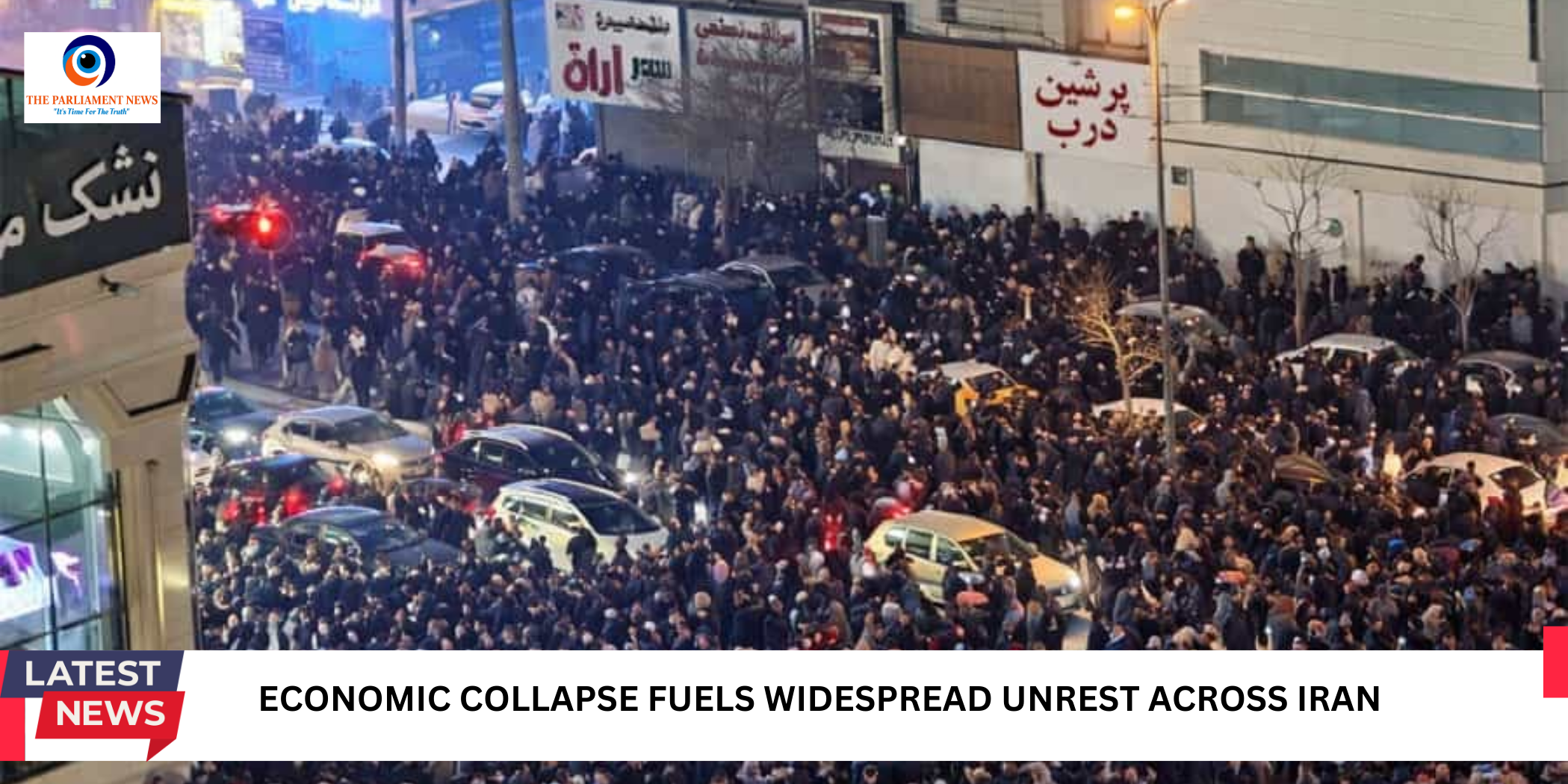
Iran has entered a period of deep unrest, with protests stretching across the country for nearly two weeks and posing the most serious challenge to the ruling establishment in years. What began as economic frustration has grown into a broader expression of public anger, cutting across cities, campuses, and social groups.
Demonstrations have now been reported in roughly 180 cities across all provinces, signalling a level of geographic spread rarely seen in recent years. Protesters have taken to streets, universities, and marketplaces, voicing grievances that go far beyond prices and wages.
Economic Pressure at the Heart of the Protests
The initial spark came from Iran’s worsening economic conditions. Inflation has surged, the national currency has sharply weakened, and basic goods have become unaffordable for many households. Shopkeepers in Tehran were among the first to strike, an unusual development given their traditional alignment with the political establishment.
As the protests gained momentum, the focus widened. Demonstrators began targeting governance failures, corruption, and long-standing political restrictions, transforming an economic protest into a national political moment.
Government Response and Escalating Tensions
Iranian authorities have responded with a heavy security presence. Thousands have reportedly been detained, including minors, and dozens of deaths have been recorded amid clashes between protesters and security forces. Officials have acknowledged injuries among police and paramilitary personnel.
A nationwide internet shutdown has further heightened tensions, cutting off communication channels used by protesters and journalists. Even satellite-based services, which had previously provided limited connectivity, appear to have been disrupted.
Trump’s Warnings Add an International Dimension
US President Donald Trump has publicly warned Iranian authorities against using lethal force, stating that the United States would respond strongly if protesters were killed. While ruling out ground intervention, he has suggested punitive measures that would target Iran’s vulnerabilities.
Trump’s remarks follow a period of increasingly assertive US foreign policy actions, and his comments have injected global attention into Iran’s internal crisis. Analysts believe these statements may embolden protesters while simultaneously restraining the government’s response.
Tehran Pushes Back, Blames External Forces
Iran’s leadership has rejected accusations of repression, instead blaming foreign interference for the unrest. Supreme Leader Ayatollah Ali Khamenei accused outside powers of exploiting economic grievances to destabilise the country, while officials have condemned US statements as provocative.
At the same time, the government has attempted limited outreach, acknowledging economic hardship and offering modest financial relief. Critics argue these steps fall far short of addressing structural economic failures.
Iran has experienced waves of mass protests before, most notably in 2009, 2019, and 2022. However, observers note a key difference this time: the protests are rooted in economic survival rather than a single social or political trigger.
The unrest has reached smaller cities that historically remained quiet, suggesting a deeper level of desperation. Analysts warn that economic-driven movements are harder to defuse, as there are fewer immediate concessions the government can realistically offer.
Iran’s exiled Crown Prince Reza Pahlavi has publicly encouraged protesters to maintain discipline and scale, calling for coordinated nationwide actions. His involvement has drawn mixed reactions but has undeniably added momentum to the movement.
Whether the protests can sustain themselves remains uncertain. Much will depend on the response of security forces, the resilience of protesters, and the regime’s ability to manage a crisis rooted in economic collapse rather than ideology.
