


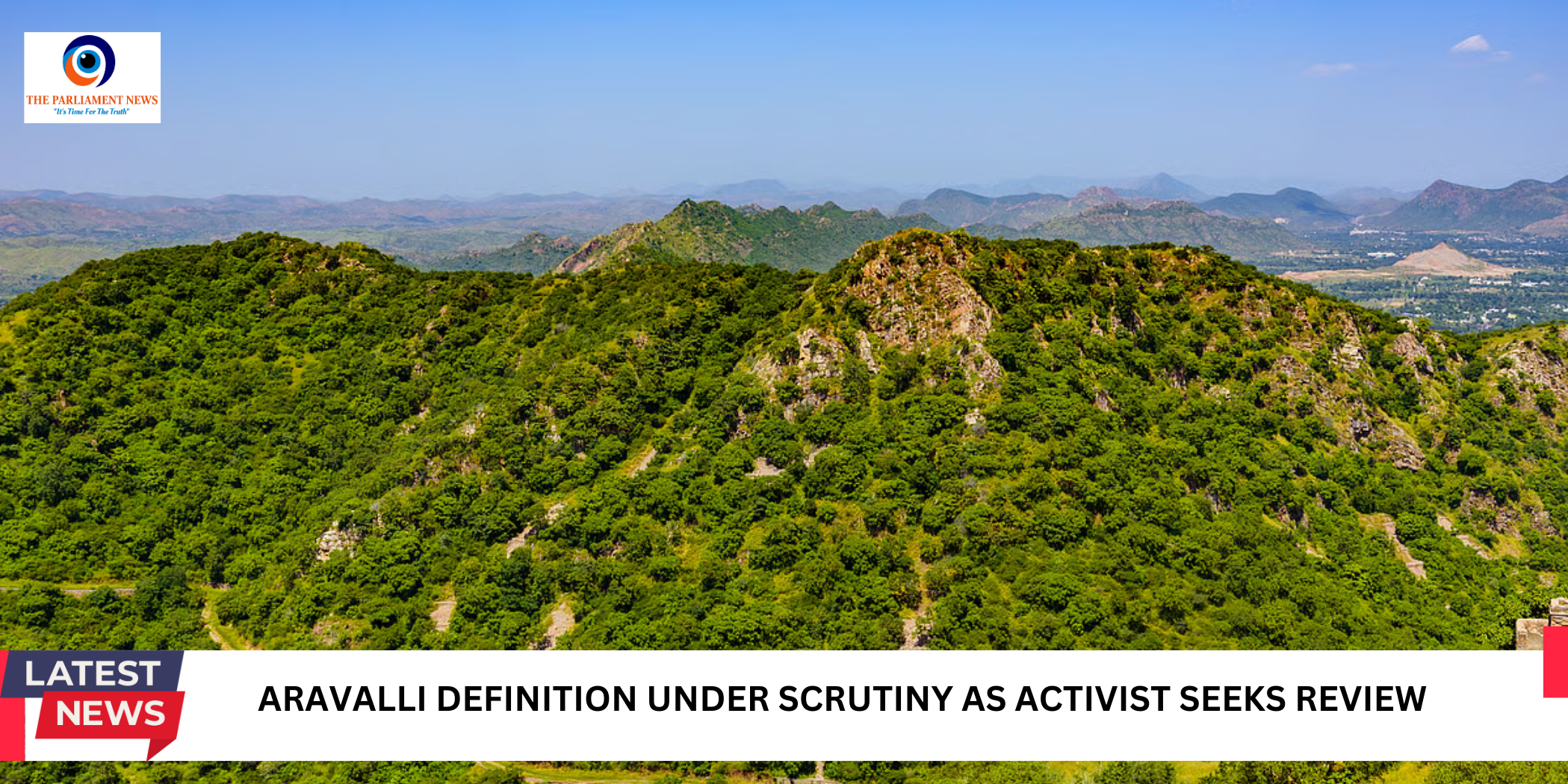
The argument about the Aravalli range has started again. This time it is because of a request to the most important people in the country. Hitendra Gandhi, who is a lawyer and cares about the environment has written to the Chief Justice of India and the President. He wants them to think again about an order from the Supreme Court. This order says what makes the Aravalli range. It is based on how high the hills are. The Aravalli range is an issue and Hitendra Gandhi is talking about the Aravalli range again. He is asking people to reconsider the decision, about the Aravalli range.
The problem with protection has become a big deal in North-West India especially in places like Rajasthan, Haryana, Delhi and Gujarat. These areas are already having a time because the water under the ground is getting used up there is a lot of pollution and cities are growing really fast. The environmental protection issue is a concern, in these regions of North-West India, including Rajasthan, Haryana, Delhi and Gujarat.
The Supreme Court’s 100-Metre criterion
The problem with the Aravalli hills is about a Supreme Court order from November 20. This order says that to be considered part of the Aravalli hills and ranges a landform must be least 100 metres higher than the land around it. The Aravalli hills are at the centre of this issue because of this definition. The Supreme Court order is very specific about what qualifies as part of the Aravalli system. That is why there is controversy, about the Aravalli hills.
The Union Environment Ministry had a committee that made some suggestions. The main goal of these suggestions was to make the definition of the Aravallis clear and the same everywhere. The Aravallis are a range of hills that go across many states. In the past people have defined the Aravallis in ways, in land records and court cases which has caused confusion. The Aravallis need to have a definition so that everyone knows what they are.
The definition has caused a lot of problems and people are really worried about it. The definition is something that has been talked about a lot and it has raised concerns. People do not like the definition. They think it needs to be changed. The definition is an issue and it affects a lot of people.
The definition has raised concerns because it is not clear and it is confusing. People do not understand the definition. They are scared of what it might mean. The definition needs to be looked at and it needs to be changed so that it is fair, for everyone.
People are talking about the definition. They are trying to figure out what it means. The definition is a deal and it is causing a lot of trouble. The definition has raised concerns. It needs to be fixed.
Gandhi said something in his letter. He thought it was a thing that the court said the Aravallis are very important for the environment. The Aravallis are a barrier that helps keep our environment safe. Gandhi liked that the court recognized this.. Gandhi also had some worries. He was worried, about how the rules would work to protect the environment. Gandhi was concerned that these rules might not really help the Aravallis and the environment in the end.
The Aravalli range is really old. Has been worn down a lot over time. This is why the Aravalli range is special because of its areas like the ridges and slopes of the Aravalli range not just the high peaks of the Aravalli range. The Aravalli range has a lot of types of land like rocky parts and areas where different landscapes meet. Gandhi said that if we only look at how tall the Aravalli range’s we might miss the important parts of the Aravalli range that are not so tall but are still very important, for the environment of the Aravalli range.
Ecological Functions Beyond Height
The Aravallis are really important. They do a lot more than being a chain of hills. Even the smaller hills in the Aravallis help to refill the groundwater. The Aravallis also stop the desert from spreading. They keep the dust from moving. The Aravallis support a lot of plants and animals. They even affect the weather, in the area especially around Delhi-NCR.
The letter said that if we only think about the elevation, big parts of the system that are all connected could lose the protection they have now. This is a problem because these parts are still very important, for science and the environment. The system is made up of parts that work together and the letter warned that this could be hurt if we only focus on the visible elevation of the system.
Legal Classification and Its Consequences
The main problem talked about in the letter is that environmental protection in India usually depends on what the law says and what is written in land records. When a place does not fit into a category that the law recognises it becomes really hard to make sure the rules are followed. Environmental protection, in India is what we are talking about here. It is a big deal.
Gandhi said that if we define something narrowly it can create some unclear areas where people can easily justify doing things like mining, building things and changing how land is used. This can be a problem, in places where people really want to develop the land because it can lead to environmental damage that we cannot fix later on. Gandhi is talking about damage that can happen because of mining, construction and land-use conversion.
Constitutional Principles Invoked
The appeal is also based on what the constitution says we have to do. Gandhi talked about Article 21 which courts have said means we have the right, to an healthy environment. He also mentioned Articles 48A and 51A(g) which say the State and citizens have a duty to protect the environment and make it better. Gandhi thinks that the State and citizens should follow these articles to protect the environment.
The idea is that when courts make decisions about the environment they should always try to protect nature. This is really important when we are talking about systems that are easily damaged and cannot be replaced. The environment is what we are trying to protect so the environment should be our main concern. We need to make sure we do what is best, for the environment.
Government’s Position on Protection and Mining
The government wants to make sure people know that the Aravalli region is still safe. They say that 90 per cent of the Aravalli region is still protected. The government has stopped giving out permits for mining, in many areas of the Aravalli region. This means that the Aravalli region is still largely protected from mining.
The Union Environment Minister, Bhupender Yadav said that the rules to protect the environment are still the same. He said that some people are giving out information about what the court decided. Bhupender Yadav made it clear that mining is still not allowed in the Aravalli range, which’s near the National Capital Region. This includes places, like Delhi, Gurugram, Faridabad, Nuh and some parts of Alwar. The Union Environment Minister, Bhupender Yadav wants to make sure everyone knows that the Aravalli range is protected and mining is not allowed there.
The Court has made several important decisions regarding mining. It has recognized that mining can cause harm to the environment and to people living near mining areas. To address these concerns, the Court has established rules to ensure that mining activities are carried out responsibly. These rules require mining companies to follow the law, take necessary precautions, and protect both people and the environment. The Court has also emphasized that mining companies must consider and respect the opinions of local communities affected by their activities. Overall, the Court plays a crucial role in regulating mining by balancing the need for resource development with the responsibility to protect human health and the environment. It will continue to make decisions to ensure that mining is conducted in a safe and sustainable manner.
The Supreme Court made a decision. They also talked about mining. The Supreme Court did not want to stop all the existing mining operations that are legal. Instead the Supreme Court told the Environment Ministry to make a plan. This plan is for the Supreme Court to make sure that mining is done in a way that’s good for the environment. The plan is called a Management Plan for Sustainable Mining. It will cover the entire Aravalli range. The Supreme Court wants this plan to help with mining, in the Aravalli range.
The mining plan is not finished yet so no new mining leases are allowed. When the mining plan is ready mining will only be allowed if it follows the approved mining management plan. The court said that stopping all mining completely could actually make people do mining and that is bad for the environment because illegal mining has its own environmental risks. The court is worried about the risks of illegal mining so it wants to make sure the mining plan is, in place to control the mining activities.
A Debate Far From Settled
The new appeal makes us think about something how should we decide what ancient landscapes with many different plants and animals are protected by law? People who care about the environment say that using rules to define these places may not be accurate. On the hand the people in charge say we need clear rules that everyone can follow. Ancient landscapes, like these need to be protected so the question is how to define landscapes in a way that works.
As the debate continues, the Aravalli issue remains a reminder of the delicate balance between development, legal certainty, and environmental protection. Any shift in interpretation is likely to have lasting consequences for one of India’s most critical natural systems.
