


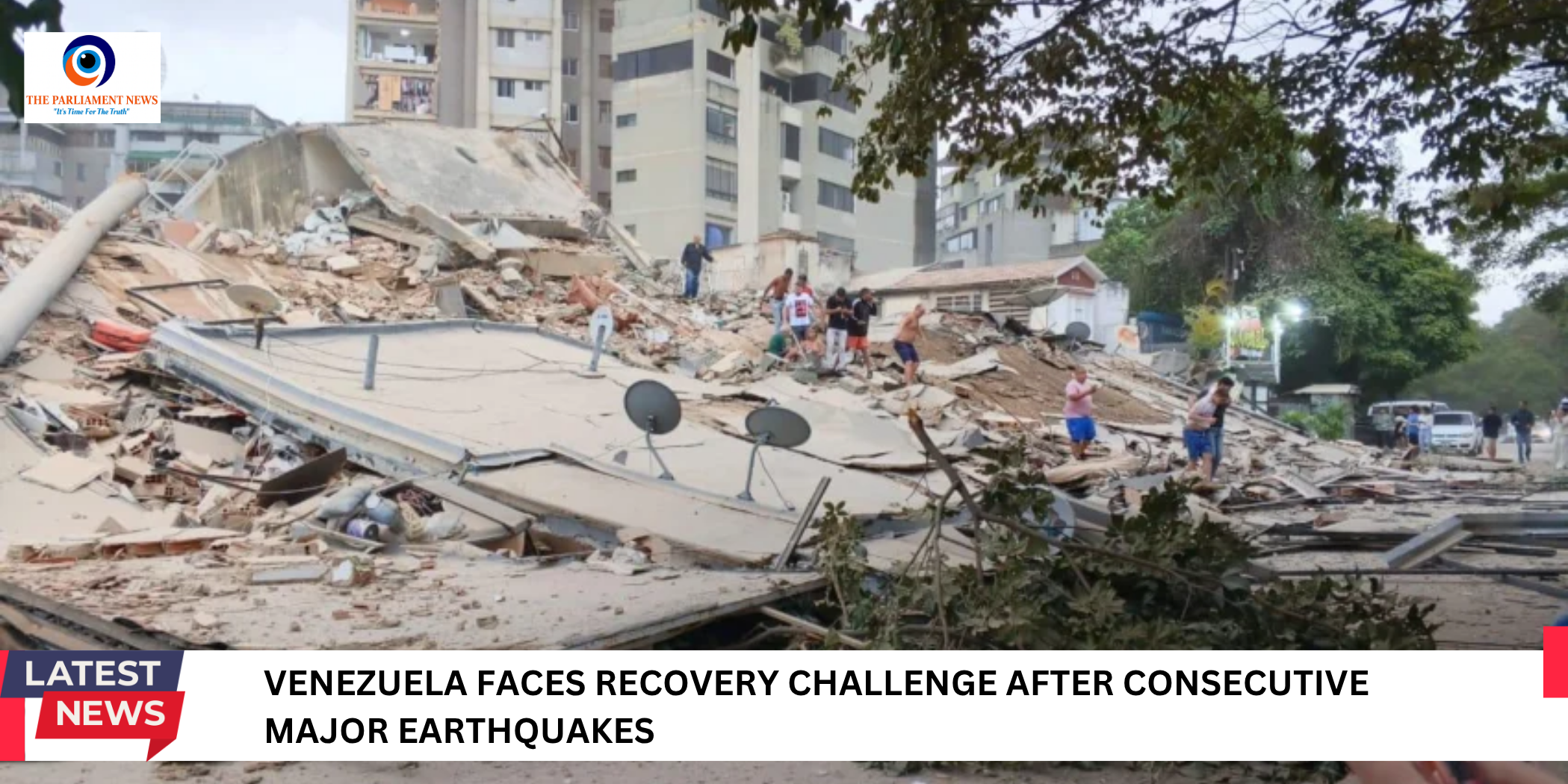
Venezuela experienced an unusual and powerful seismic event on June 24, 2026, when two major earthquakes struck within less than a minute of each other. Measuring 7.2 and 7.5 in magnitude, the earthquakes created a rare phenomenon known as an “earthquake doublet” two significant seismic events occurring in rapid succession along the same tectonic region.
While earthquakes are not uncommon in parts of northern South America, the timing and intensity of these twin shocks made the event particularly destructive. The disaster not only damaged infrastructure and disrupted daily life but also highlighted the challenges countries face when natural hazards intersect with densely populated communities.
Why Did Two Earthquakes Occur So Close Together?
The earthquakes occurred in a tectonically active zone where the Caribbean Plate interacts with the South American Plate.
As these massive sections of the Earth’s crust slowly move against one another, stress gradually accumulates along geological faults. When the pressure becomes greater than the rocks can withstand, the energy is released suddenly as an earthquake.
In this case, the first earthquake was quickly followed by a second, stronger event. Seismologists describe such occurrences as earthquake doublets. Although rare, these events can be significantly more damaging than a single earthquake because structures weakened by the initial shock are immediately exposed to another major tremor before stability can be restored.
For residents, the short interval between the two earthquakes left little time to react or seek safety.
Impact on Cities and Infrastructure
The strongest effects were felt across northern Venezuela, including several urban and populated regions.
Buildings, roads, bridges, and public infrastructure experienced varying levels of damage as powerful ground shaking spread across affected areas. Some structures that may have survived one major earthquake suffered additional damage when the second quake struck moments later.
Transportation networks faced disruptions as damaged roads and debris complicated movement. Reports also indicated interruptions to electricity supplies and communication services in some regions.
Emergency response teams were deployed quickly, but access to certain areas became difficult due to damaged infrastructure and concerns about ongoing seismic activity.
The event demonstrated how closely modern societies depend on interconnected systems such as transportation, power, telecommunications, and emergency services.
The Threat Beyond the Initial Shaking
The impact of an earthquake often extends well beyond the first moments of ground movement.
In Venezuela’s case, landslides emerged as one of the most significant secondary hazards. In mountainous and elevated regions, unstable slopes gave way following the intense shaking, blocking roads and isolating some communities.
Aftershocks also became a major concern.
Even smaller aftershocks can be dangerous when buildings have already suffered structural damage. Rescue workers often face additional risks while searching for survivors in unstable structures.
At the same time, disruptions to water systems, healthcare facilities, electricity networks, and public services can prolong the humanitarian impact of a disaster long after the initial event has passed.
The Human Cost Extends Beyond Statistics
While casualty and injury figures are often the most visible indicators of a disaster, the true human impact is much broader.
Families may lose loved ones, homes, businesses, and sources of income within minutes. Thousands of people can be displaced when buildings become unsafe to occupy.
For many residents, the aftermath of the earthquakes involves uncertainty about housing, employment, education, and access to essential services.
Schools may remain closed, businesses may suspend operations, and healthcare systems can come under increased pressure. Communities often spend weeks or months assessing damage, rebuilding homes, and restoring normal routines.
The emotional and psychological effects of major earthquakes can also persist long after physical reconstruction begins.
Economic Recovery Could Take Time
The financial consequences of the disaster are expected to be substantial.
Damage to homes, commercial properties, transportation infrastructure, and public facilities will require significant investment for repair and reconstruction. Businesses affected by damaged supply routes and infrastructure disruptions may face extended operational challenges.
For local economies, recovery is rarely immediate. Reconstruction efforts can take months or even years, depending on the scale of damage and available resources.
The earthquakes also highlight how natural disasters can affect economic growth by diverting resources toward emergency response and rebuilding efforts.
A Reminder About Preparedness and Resilience
The twin earthquakes serve as a reminder that while earthquakes themselves cannot be prevented, their impact can be reduced through preparedness and resilient infrastructure.
Strong building standards, effective emergency planning, public awareness programmes, and rapid response systems play a critical role in limiting damage and saving lives.
Natural hazards become large-scale disasters when vulnerable populations and infrastructure are exposed to them. As countries around the world face increasing risks from various natural hazards, investment in resilience remains one of the most effective ways to reduce future losses.
For Venezuela, the focus now shifts from emergency response to recovery. But the lessons from this rare earthquake doublet will likely shape discussions on disaster preparedness, infrastructure safety, and resilience long after the ground has stopped shaking.
