


A Surprise but Inevitable Resignation
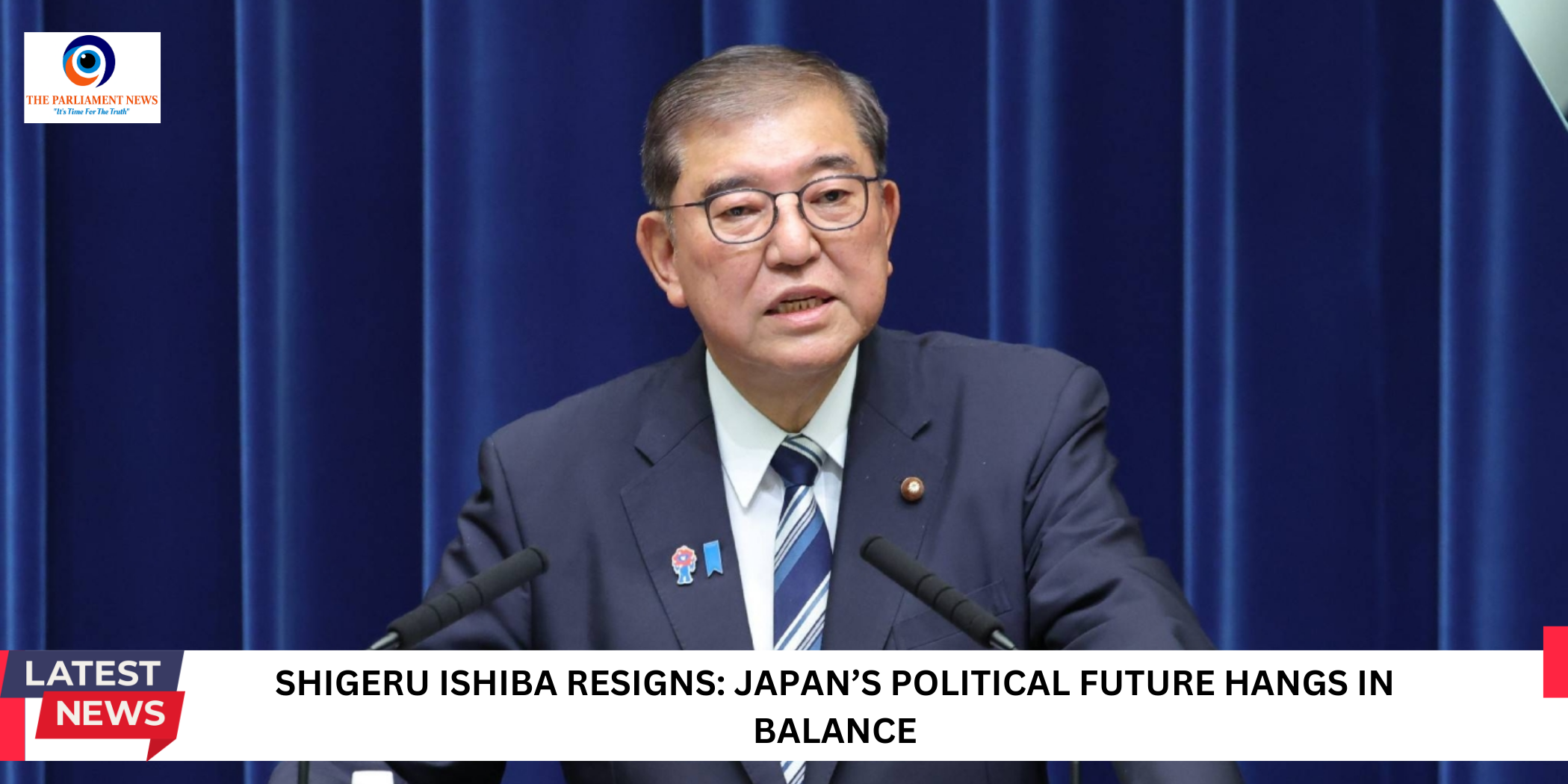
Japanese Prime Minister Shigeru Ishiba announced his resignation on Sunday after enduring mounting political pressure and successive election setbacks. His decision ends a short yet turbulent tenure marked by economic challenges, party discontent, and growing public dissatisfaction.
At a televised press conference, Ishiba stated, “I have decided to resign from my position as president of the Liberal Democratic Party. I have told Secretary-General Moriyama to carry out the procedures for a presidential election.”
Political Turmoil in the Liberal Democratic Party
Ishiba’s departure came just one day before the ruling Liberal Democratic Party (LDP) was scheduled to decide on whether to trigger an early leadership vote — a move widely viewed as a no-confidence test. The loss of parliamentary majorities in both houses further eroded Ishiba’s support base.
Party veterans, including former Prime Minister Taro Aso, along with other senior cabinet members, openly called for Ishiba’s resignation. Meeting with Agriculture Minister Shinjiro Koizumi and former Prime Minister Yoshihide Suga, Ishiba faced direct appeals to step down before the leadership showdown.
The Challenges That Defined His Tenure
Though Ishiba had warned that his resignation would create a vacuum in governance, his leadership had already been weakened by pressing issues:
- U.S. tariffs impacting Japanese industries
- Rising domestic prices placing pressure on households
- Rice policy reforms sparking debate among farmers
- Geopolitical tensions in East Asia
His last major policy achievement as prime minister was finalising a trade deal with the United States, reducing tariffs on Japanese exports in exchange for large-scale investments from Japan.
The Road Ahead: A Leadership Contest
The LDP will now hold an emergency election to appoint a new leader. Potential successors include:
- Sanae Takaichi, a senior party figure known for her criticism of the Bank of Japan’s rate policies.
- Shinjiro Koizumi, the youthful farm minister and rising star within the LDP.
Analysts suggest that the new leader might consider calling a snap general election to consolidate power, though a recent Kyodo poll revealed that 55% of the public opposes an early vote.
What Ishiba Leaves Behind
In his final remarks, Ishiba, visibly emotional, expressed hope that Japan could enter a “golden era” of strengthened alliances, particularly with the United States. His resignation closes a brief but controversial chapter in Japan’s political history, leaving behind uncertainty and anticipation for the LDP’s next direction.
