


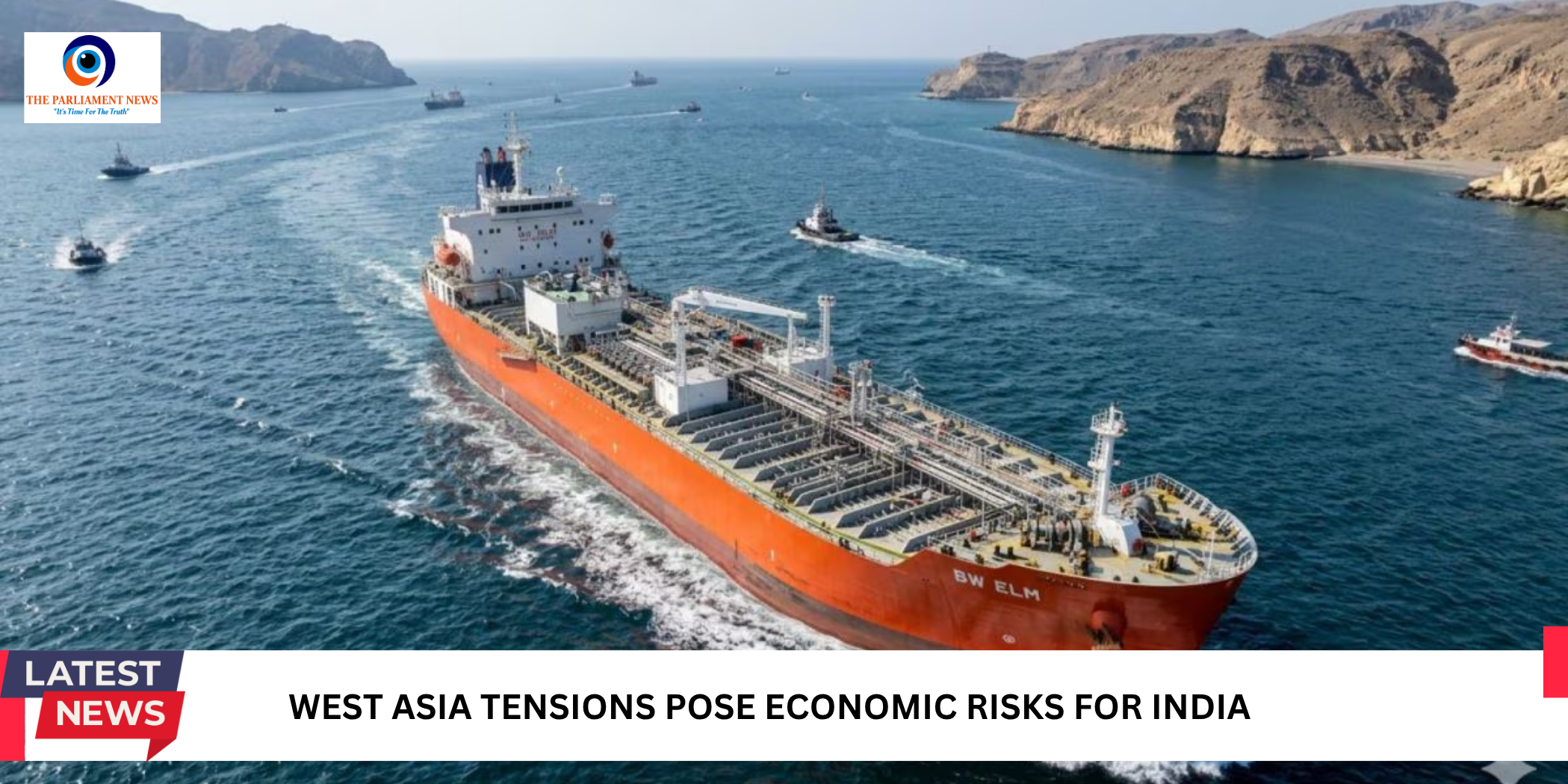
India’s economic growth outlook for FY27 faces potential downside risks amid escalating geopolitical tensions in West Asia, according to Chief Economic Adviser V. Anantha Nageswaran.
In the Finance Ministry’s Monthly Economic Review for March, the CEA noted that the earlier GDP growth projection of 7–7.4% may be difficult to sustain under current global conditions. He indicated that clearer trends would emerge based on high-frequency data from April and May.
Impact of Rising Energy Prices
The conflict in West Asia has led to a sharp increase in crude oil prices, raising concerns about its impact on India’s import bill and overall economic stability. Higher energy costs are expected to influence domestic demand and may widen the current account deficit.
India’s crude basket price rose significantly in March compared to February, reflecting volatility in global energy markets.
Growth and Inflation Risks
The CEA highlighted that while moderate increases in crude prices may have a limited macroeconomic impact, sustained high prices could affect both growth and inflation.
He indicated that crude prices at elevated levels over multiple quarters could push inflation higher while reducing growth momentum. Global financial institutions have also begun revising India’s growth forecasts downward in response to evolving conditions.
Market Reactions and External Pressures
Financial markets have shown signs of stress amid the ongoing crisis. Foreign investment outflows, currency depreciation, and rising bond yields point to increased uncertainty.
The Indian rupee has weakened against the US dollar, while equity markets have recorded declines and borrowing costs have risen due to inflation concerns.
Key Transmission Channels
The CEA identified several channels through which the crisis could impact the Indian economy:
- Disruptions in supply of oil, gas, fertilisers, and exports
- Higher import costs
- Increased logistics and transportation expenses
- Potential decline in remittances from Indian workers in Gulf countries
These factors could collectively affect growth, inflation, fiscal balance, and the external account.
Policy Response and Fiscal Strategy
Nageswaran emphasised the need for calibrated policy responses to manage the evolving situation. He suggested prioritising support for vulnerable households and businesses while maintaining macroeconomic stability.
He also highlighted the importance of building strategic reserves and strengthening resilience in key sectors beyond energy.
Outlook and Uncertainty
While a ceasefire and restoration of normal shipping through critical routes like the Strait of Hormuz could improve the outlook, uncertainty remains around the timeline for recovery.
The CEA advised policymakers to plan for gradual normalisation rather than a rapid resolution, given the complexities of the situation.
Government Measures
Recent policy steps, including adjustments in fuel-related duties, aim to cushion the impact of rising global prices on domestic consumers. However, such measures may have implications for government revenues.
As global developments continue to unfold, India’s economic trajectory in FY27 will depend on both external conditions and domestic policy responses.
