


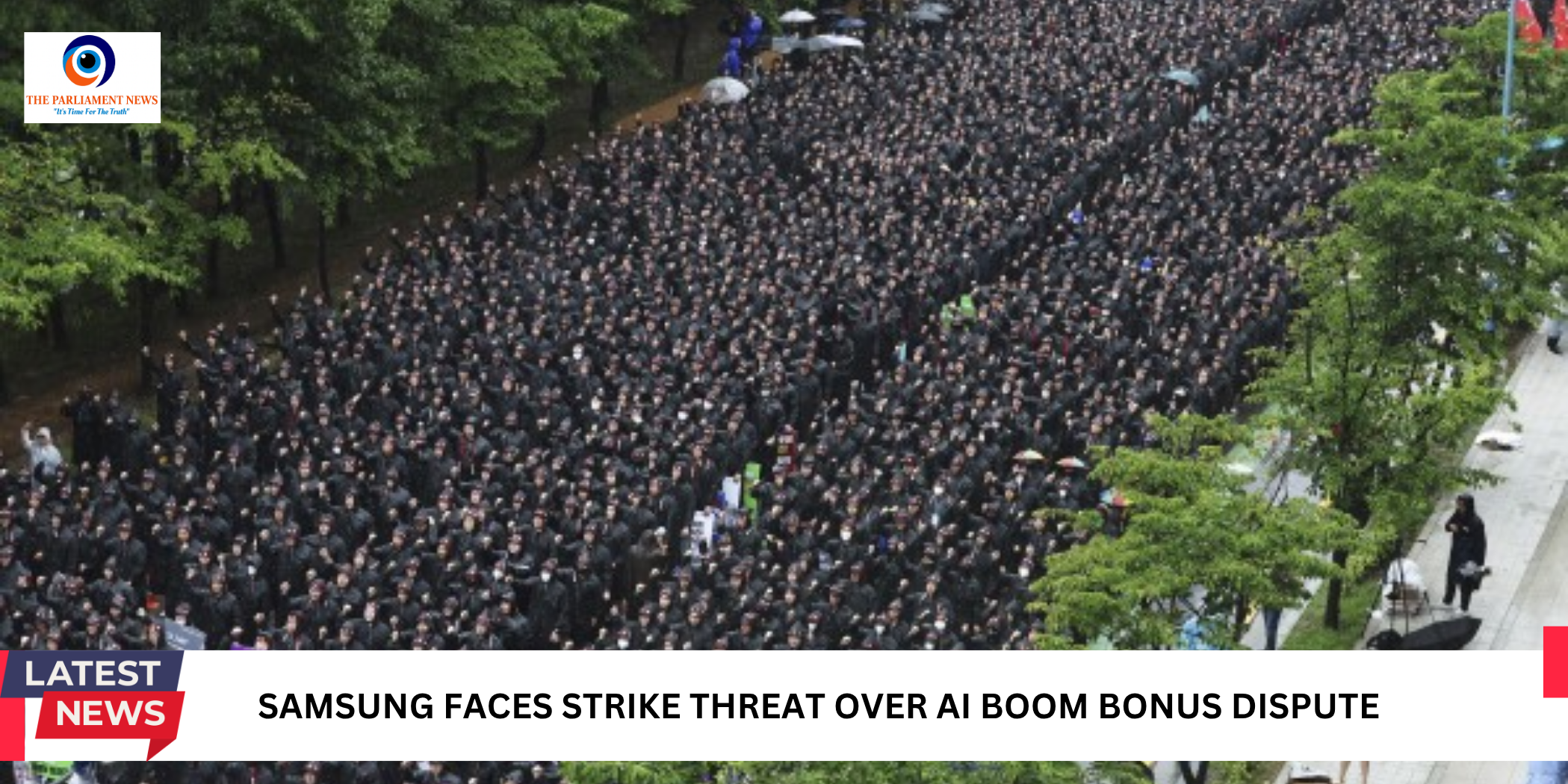
South Korean technology giant Samsung Electronics is facing the threat of an 18-day strike that could disrupt global semiconductor supply chains and intensify concerns over labour relations in the country’s technology sector.
More than 45,000 employees are reportedly preparing to participate in what could become the largest strike in the company’s history. The industrial action is centred on disagreements over bonus payouts linked to profits generated during the artificial intelligence-driven chip boom.
At the core of the dispute is how the company distributes rewards among workers in different semiconductor divisions. Samsung’s memory chip business has recorded strong profits due to rising demand for AI-related hardware, while its logic chip and foundry operations have faced financial losses in recent years.
According to reports, Samsung proposed significantly higher bonuses for around 27,000 workers in its memory chip division, with payouts reaching more than 600% of annual salaries. Employees in other semiconductor units, including those involved in AI chip manufacturing and foundry operations, were reportedly offered substantially lower bonuses ranging between 50% and 100%.
The company’s labour union argues that workers across divisions contribute to Samsung’s broader AI ambitions and should receive more balanced compensation. Union representatives have warned that the large disparity could lead to employee departures and weaken Samsung’s long-term competitiveness.
The dispute has exposed deeper tensions within Samsung’s semiconductor structure. The company operates multiple chip businesses under a single division, including memory chips, logic chips, and foundry manufacturing. Industry analysts say the rapid growth of the AI market has widened profitability differences between these units.
Samsung remains the world’s largest memory chipmaker, supplying components used in data centres, smartphones, and laptops. At the same time, the company has been attempting to expand its position in the logic chip and contract manufacturing market, where it competes with firms such as Taiwan Semiconductor Manufacturing Company and Micron Technology.
Some workers and union officials claim the current compensation structure is encouraging employees to leave Samsung’s foundry operations for competitors such as SK Hynix, which recently revised its own bonus system.
Industry experts have warned that a prolonged strike could affect global semiconductor production and investor confidence. Estimates from financial institutions suggest that the disruption could result in significant losses in operating profit and sales if production slows.
The concerns have also attracted attention from the South Korean government and business groups. Officials have cautioned that extended labour unrest at Samsung could affect the country’s broader economy, exports, and manufacturing reputation.
Samsung has defended its position, stating that performance-based bonuses should reflect business results. The company also said it continues to invest heavily in its loss-making logic chip business as part of a long-term strategy to strengthen its AI and semiconductor capabilities.
The company warned that any failure to deliver products to customers due to strike-related disruptions could damage trust with global clients.
The planned strike, if carried out, could become a significant test for labour-management relations in South Korea’s technology industry at a time when global demand for AI chips continues to grow rapidly.
