


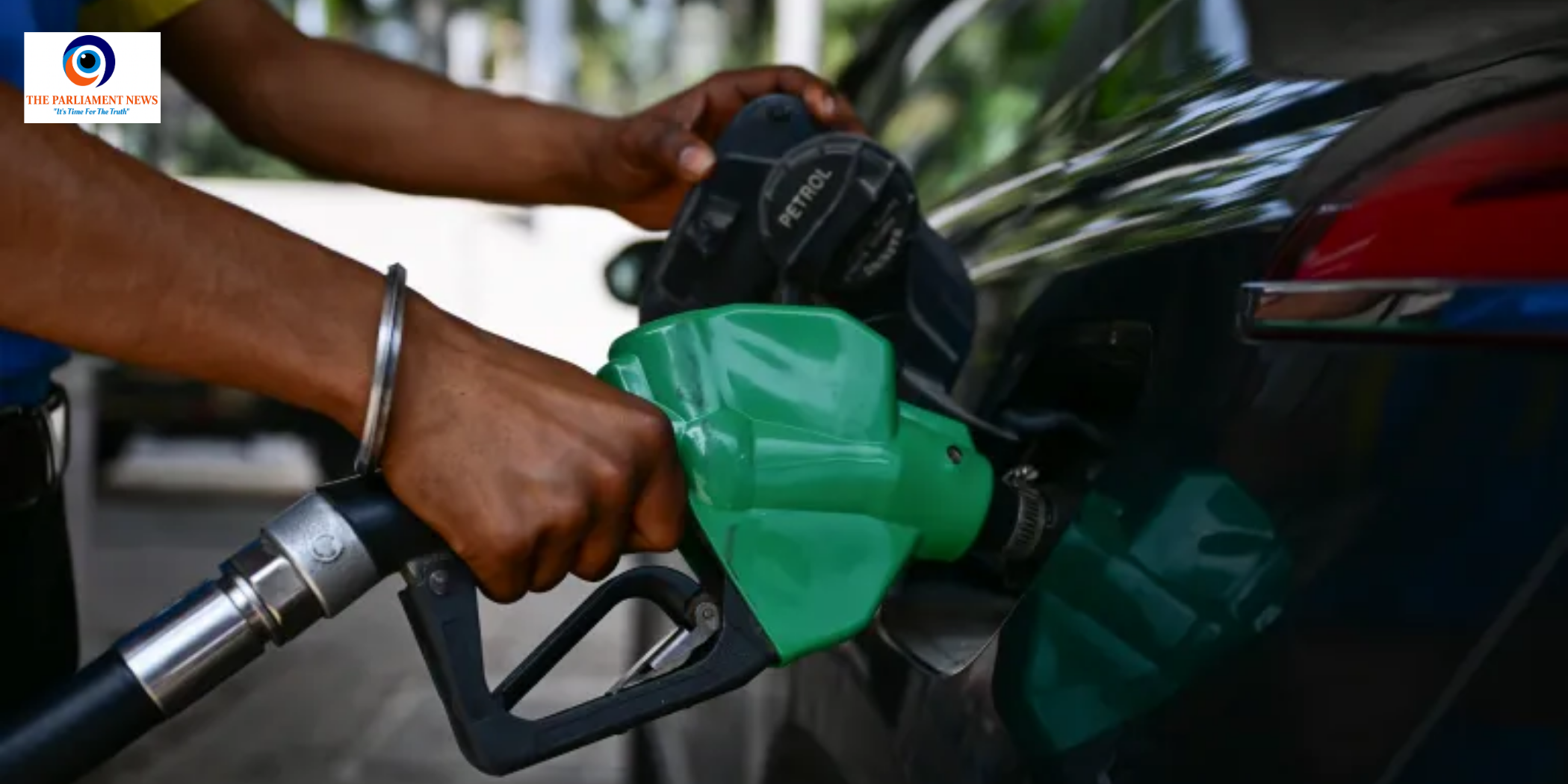
India’s transition towards E20 petrol is often discussed as a fuel reform, but its impact goes much deeper. It is a policy decision that sits at the intersection of energy security, agriculture, consumer behaviour, automobile technology, and market economics.
The government’s objective behind ethanol blending is straightforward: reduce India’s dependence on imported crude oil, support domestic ethanol production, reduce emissions, and create additional income opportunities for farmers.
From a national economic perspective, the reasoning is clear. India imports nearly 85% of its crude oil requirements, making the country vulnerable to global crude price fluctuations and geopolitical disruptions. Increasing ethanol blending provides an opportunity to reduce a portion of this import dependence while developing a domestic biofuel ecosystem.
The scale of this transition has been significant.
| Indicator | Latest Figure |
|---|---|
| India’s crude oil import dependence | Nearly 85% |
| Ethanol blending in petrol (2014) | 1.5% |
| Ethanol blending achieved (2025) | 20% |
| Target achievement | Five years ahead of schedule |
| Estimated foreign exchange savings | Around ₹1.9 lakh crore |
| Estimated payments to farmers | Around ₹1.6 lakh crore |
| Estimated CO₂ emissions reduction | Nearly 700 lakh tonnes |
| Vehicles manufactured after April 2023 | Designed for E20 compatibility |
These figures explain why E20 is considered an important economic reform. By replacing a portion of imported petrol components with domestically produced ethanol, India aims to improve energy independence while strengthening agricultural supply chains.
However, large-scale policy changes often create new market dynamics, and E20 is no exception.
The Shift in Consumer Behaviour
While policymakers focus on national-level benefits, individual consumers are concerned with a more immediate question: how will this affect their vehicle?
Many motorists have raised concerns about mileage, engine performance, maintenance costs, and long-term compatibility. These concerns have contributed to increased interest in premium petrol among some vehicle owners, as many perceive it as a safer or more reliable option.
Whether every consumer assumption is technically accurate depends on the vehicle model, manufacturer specifications, and fuel formulation. However, from an economic perspective, perception itself influences demand.
When consumers face uncertainty, they often choose products that provide greater reassurance, even if they come at a higher cost.
This behaviour is visible across several sectors. Customers frequently pay more for premium products because they associate higher prices with better quality, lower risk, or greater reliability. Fuel markets are no different.
Why Premium Petrol Supply Has Become a Challenge
The growing preference for premium petrol creates an interesting challenge for fuel retailers.
Petrol stations operate with limited storage capacity. Historically, regular petrol and diesel have accounted for the majority of fuel sales, so retail infrastructure has been designed around those products.
Premium petrol, despite having a higher selling price and potentially better margins per litre, has traditionally represented a much smaller share of total sales. For many retailers, dedicating significant storage capacity to a lower-volume product has not always been commercially practical.
However, when consumer demand changes quickly, supply infrastructure cannot adjust at the same pace.
Fuel stations cannot immediately increase storage capacity, modify distribution systems, or change inventory planning. As a result, temporary shortages or limited availability can occur when demand rises faster than supply.
This creates an interesting market cycle. Limited availability can increase the perception that premium petrol is a superior product, which may encourage even more consumers to seek it out.
The Transparency Debate Around E20
The discussion around E20 has now moved beyond consumer preferences and into legal territory.
A petition before the Supreme Court has raised concerns regarding transparency in the rollout of E20 petrol. Importantly, the petition does not seek to reverse India’s ethanol-blending policy. Instead, it argues that consumers should have clearer information about fuel composition, vehicle compatibility, and potential implications before making purchasing decisions.
The petitioner has argued that when a nationwide policy changes the characteristics of a commonly purchased product, consumers have a right to understand what they are buying. The petition refers to provisions including Article 300A of the Constitution and the Consumer Protection Act, 2019, to support the argument that product information and transparency are essential consumer safeguards.
The petition also highlights the technical differences between ethanol and conventional petrol. Ethanol is hygroscopic, meaning it absorbs moisture, and it has lower energy density compared with petrol. Depending on vehicle design, ethanol blends may influence fuel efficiency, fuel-system materials, maintenance requirements, and long-term vehicle performance.
At the same time, compatibility is not the same for every vehicle.
The Bureau of Indian Standards has issued separate specifications for E20 fuel, while the Ministry of Road Transport and Highways has introduced a phased approach for E20-compatible vehicles. This reflects the fact that vehicle compatibility depends on engineering design and manufacturing timelines.
The Industry’s Perspective
Automobile manufacturers and industry experts have maintained that E20-compatible vehicles have undergone extensive testing and are designed to operate safely with the fuel blend.
They acknowledge that ethanol has lower energy density than petrol, which can result in a modest reduction in fuel economy, generally estimated around 2–4% depending on vehicle type and conditions. However, they argue that this should not be interpreted as evidence of widespread engine damage in compatible vehicles.
Most manufacturers also point out that vehicles produced after April 2023 were developed with E20 compatibility in mind.
For older vehicles, the situation depends largely on the manufacturer’s recommendations and the specific model.
The Economics of Information
One of the biggest lessons from the E20 transition is the importance of information in markets.
Economists describe situations where buyers and sellers do not have equal information as “information asymmetry.” When consumers are unsure about a product, they often make decisions based on perceived risk rather than complete technical understanding.
This appears to be one reason behind the growing preference for premium petrol among some motorists. The purchase is not only about fuel quality it is also about reducing uncertainty.
Better communication can therefore play an important role in improving market confidence. Clear fuel labelling, accessible vehicle compatibility information, and consistent guidance from manufacturers and policymakers can help consumers make decisions based on facts rather than assumptions.
Conclusion
India’s E20 programme represents a major economic transition with significant potential benefits. Reducing crude oil dependence, supporting domestic ethanol production, and strengthening energy security are important national objectives.
At the same time, successful implementation requires more than infrastructure and policy targets. It requires consumer awareness and trust.
The debate around E20 is ultimately not only about what goes into the fuel tank. It is about how a country manages a major economic transition while ensuring that consumers remain informed and confident about the choices they make.
